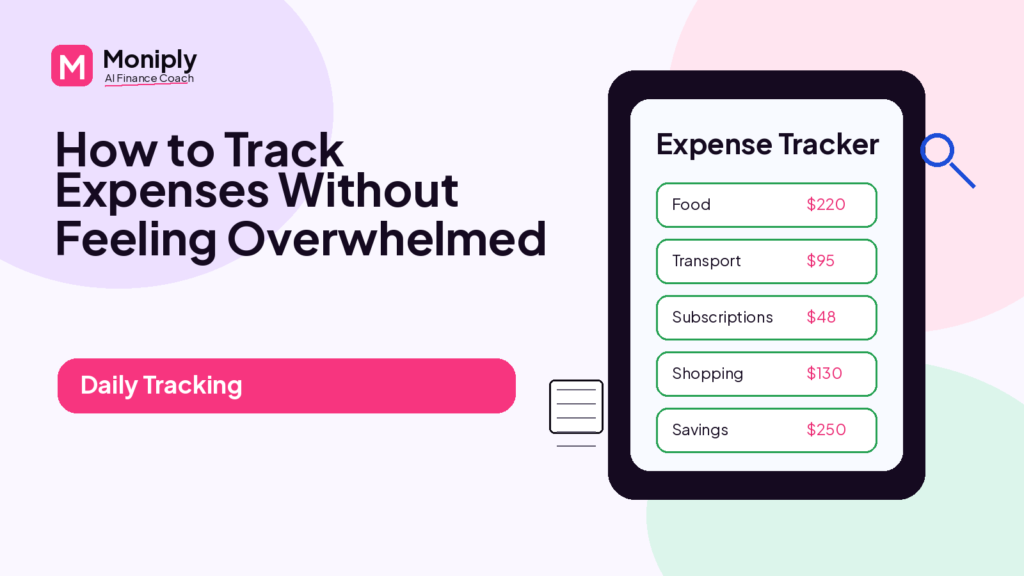
Expense tracking sounds simple: write down what you spend. But many people stop after a few days because it feels boring, judgmental, or too detailed. They miss one purchase, then another, and finally decide the whole system failed.
The truth is that expense tracking does not have to be perfect to be useful. You do not need to record every cent forever. You need a simple system that shows where money goes, which categories are causing stress, and what small changes can improve your budget.
The CFPB recommends tracking spending for at least two weeks or even a month to get a better picture of spending habits. That is the goal of this guide: a realistic tracking system that gives you awareness without overwhelm.
Expense tracking works best when connected to your monthly budget guide, because tracking shows what really happened and budgeting decides what should happen next.
Why Expense Tracking Matters
Most budgets fail because they are based on guesses. A person may think they spend $300 on food, but the real number may be $520. Another person may forget subscriptions, bank fees, delivery charges, small cash spending, or impulse purchases.
Tracking reveals patterns. It shows the difference between planned spending and actual spending. Once you see the pattern, you can make better decisions without blaming yourself.
Start With 7 Days
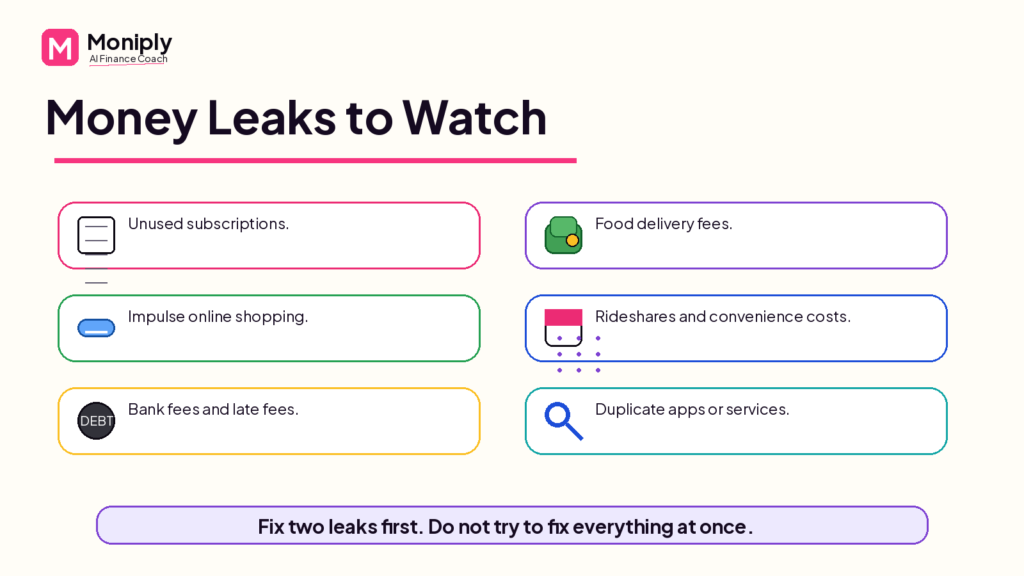
If a full month feels overwhelming, start with seven days. Track every purchase during one normal week. Include card payments, cash, digital wallets, bank transfers, subscriptions, and small purchases.
At the end of the week, total spending by category. You may discover that one or two categories explain most of the pressure. That is useful information.
Use Simple Categories
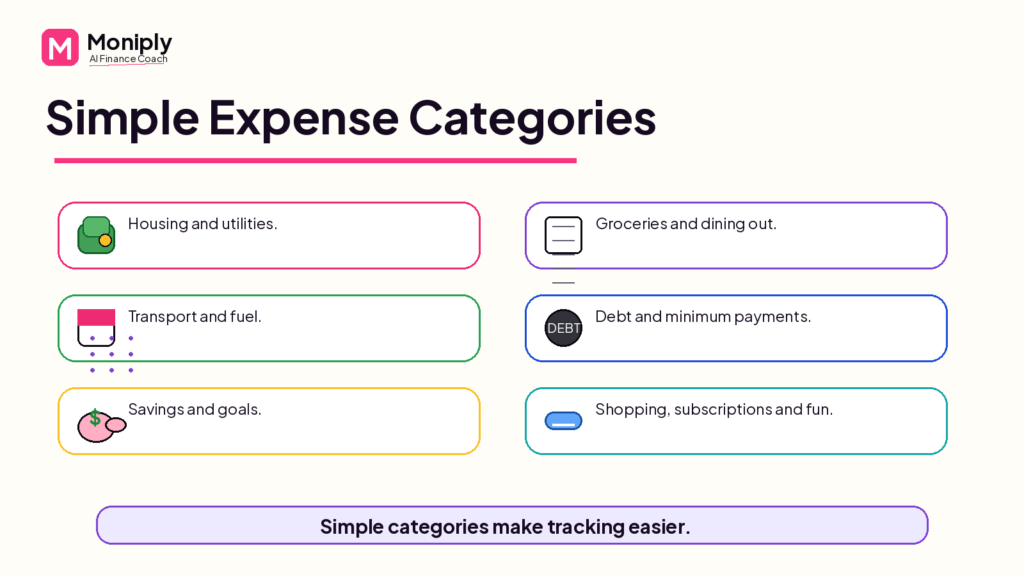
Do not create too many categories at the beginning. Too many categories make tracking harder. Start with housing, utilities, groceries, transport, debt, savings, subscriptions, dining out, shopping, health, family, and fun.
Once the habit is easy, you can add more detail. For example, food can later become groceries, restaurants, coffee, and delivery.
Choose a Tracking Method That Fits You
There is no perfect tracking tool. The best method is the one you will actually use. You can use a notebook, spreadsheet, banking app, envelope system, receipt folder, or Moniply’s expense tracker inside the dashboard.
If you like simplicity, use a notes app and update it once per day. If you like structure, use a spreadsheet or app. If you use cash, keep receipts and review them weekly.
Track Without Shame
Expense tracking is not a punishment. It is feedback. If you overspend on food, that does not mean you are bad with money. It means your food budget needs attention.
Use neutral language. Instead of saying, ‘I wasted money,’ say, ‘This category was higher than expected.’ That mindset makes it easier to continue.
Do a Weekly Review
Tracking is only useful if you review it. Set a weekly 15-minute money check-in. Ask: Which category is higher than expected? Which spending was planned? Which spending was emotional? What should I adjust next week?
A weekly review prevents month-end surprises. It also makes your budget feel flexible instead of strict.
Find Your Money Leaks
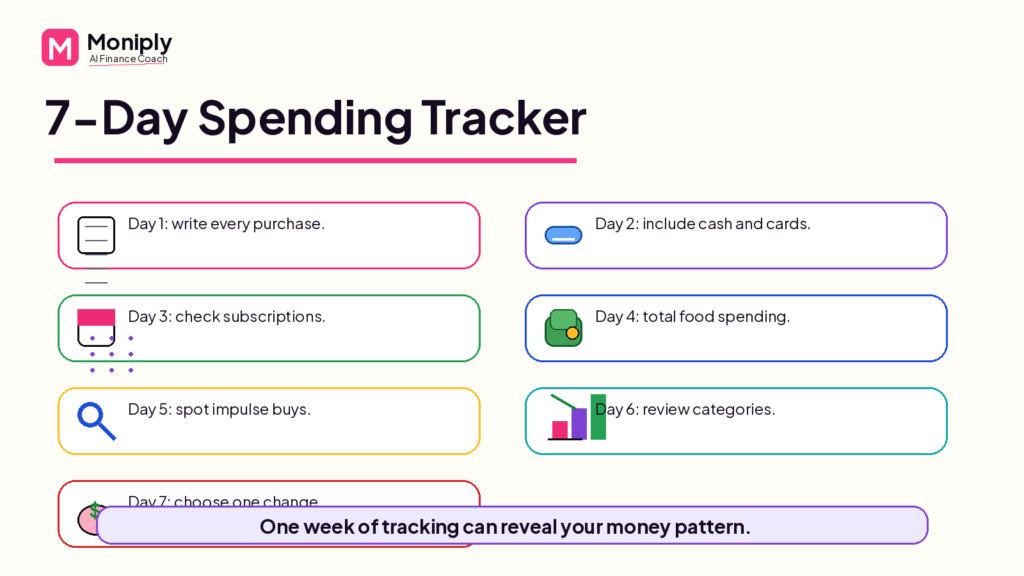
Money leaks are small repeated expenses that do not feel serious individually but become expensive together. Common leaks include unused subscriptions, delivery fees, convenience purchases, app upgrades, bank fees, impulse shopping, rideshares, duplicate services, and forgotten memberships.
Do not try to fix every leak at once. Pick the easiest two. Cancel one unused subscription and reduce one flexible category. Then send the saved amount to a goal.
Connect Tracking to Goals
Expense tracking becomes more motivating when it supports a goal. If you are saving for an emergency fund, travel, a laptop, or debt payoff, tracking helps you find money for that goal.
Use a savings goal tracker to connect reduced spending with visible progress.
Track Debt Payments Too
Debt payments should be tracked like any other expense. Include minimum payments, extra payments, due dates, and remaining balances.
If debt is affecting your monthly cash flow, use a debt payoff coach to connect expenses with a payoff strategy.
When Not to Track Everything
Some people become too strict and start feeling anxious about every purchase. If tracking makes you stressed, simplify. Track categories instead of individual items. Review weekly instead of multiple times daily. Focus on patterns, not perfection.
The goal is awareness, not obsession.
How Moniply Helps With Expense Tracking
Moniply helps organize income, spending, budgets, savings goals, debt payoff, reports, and coaching in one place. The budget dashboard helps connect daily expenses with monthly goals, while the AI finance coach can help explain trends and suggest next actions.
Instead of guessing where money went, you can review categories, identify leaks, and adjust the plan before the month ends.
Expense Tracking by Lifestyle
A student may track food, transport, phone, subscriptions, school supplies, and social spending. A freelancer may track business tools, tax savings, software, client travel, irregular income, and personal spending separately. A family may track groceries, school costs, transport, healthcare, childcare, and household supplies.
The right categories depend on your life. Do not copy someone else’s tracker if it does not fit your spending reality. A useful tracker reflects the decisions you actually make every week.
If you share expenses with family or a partner, decide which costs are shared and which costs are personal. This prevents confusion and reduces money arguments.
Expense Categories by Age and Profession
Gen Z and people under 30 may need categories for food delivery, rideshares, subscriptions, fashion, travel, education, and side-hustle tools. People in their 30s and 40s may need categories for children, housing, insurance, family support, debt, and savings goals.
Professionals such as doctors, teachers, freelancers, remote workers, and business owners may need work-related categories. These can include licensing, software, equipment, transport, meals, office supplies, or professional development.
The goal is not to make tracking complicated. The goal is to make spending visible enough that better decisions become easier.
Seasonal Spending to Watch
Expense tracking becomes more useful when it accounts for seasons. Winter may increase heating, clothing, healthcare, and transport costs. Summer may increase travel, entertainment, outdoor activities, and family events. Holiday seasons can increase gifts, food, decor, and travel.
Instead of treating seasonal costs as surprises, create seasonal categories or sinking funds. This keeps your monthly budget more stable and reduces the chance of using debt for predictable costs.
Review last year’s seasonal spending if possible. Even a rough estimate can help you prepare better this year.
How to Make Tracking Automatic
To reduce overwhelm, attach tracking to an existing habit. Update spending after dinner, before sleeping, every Friday, or every payday. A routine is easier than relying on motivation.
Use simple rules: record the amount, category, date, and short note. Do not write a long story for every purchase. If a purchase was emotional or unplanned, mark it with a small note and move on.
At the end of each week, look for one lesson. Maybe groceries are higher than expected. Maybe subscriptions need cleanup. Maybe dining out is the main leak. One lesson per week is enough.
The 10-Minute Weekly Expense Review
A weekly review keeps tracking simple. Set a timer for 10 minutes. Open your notes, bank app, spreadsheet, or dashboard. Look at total spending by category and compare it with your budget.
Ask three questions: What surprised me? What can I adjust next week? What spending helped my life and what spending did not? These questions make the review practical instead of judgmental.
Do not spend hours analyzing every transaction. Over-analysis can create fatigue. The goal is to find one useful adjustment each week.
How to Track Shared Expenses
Shared expenses can create confusion if nobody knows who paid what. For couples, roommates, or families, track shared expenses separately from personal spending. Examples include rent, groceries, utilities, childcare, transport, and household supplies.
Agree on the method before the month starts. One person may pay and the other reimburses, or each person may contribute to a shared monthly budget. The important point is that everyone can see the numbers.
Shared tracking reduces stress because it turns money conversations from accusations into facts.
What to Do With the Data
Expense data only helps when it leads to action. After tracking, choose one change. You might reduce food delivery, cancel a subscription, set a shopping limit, plan grocery meals, or move savings before spending.
Do not try to fix every category at once. Pick the category that creates the most pressure or the category that is easiest to change. Quick realistic wins make the system easier to continue.
After one month, compare your new spending with the previous month. This is where tracking becomes powerful: it shows whether your decisions are actually changing the numbers.
Expense Tracking for Cash, Cards, and Digital Wallets
Many people miss expenses because they spend through different channels. Cash, debit cards, credit cards, mobile wallets, bank transfers, and buy-now-pay-later apps can all hide spending if they are not reviewed together.
Create one place where every payment method is recorded. You do not need a complicated system. A simple daily note with amount, category, and payment method can reveal patterns quickly.
If you use cash often, keep a small receipt envelope or write cash purchases immediately. Cash disappears fastest when it is not tracked.
The Most Important Rule: Keep the System Easy
Expense tracking should make money easier, not harder. If your tracker has too many categories, too many colors, or too many rules, simplify it. A basic tracker that you use every week is better than a perfect tracker you avoid.
Start with simple categories, review once per week, and choose one improvement at a time. The goal is not to control every purchase forever. The goal is to understand your patterns well enough to make calmer money decisions.
A Simple Tracking Success Measure
You know expense tracking is working when you can answer three questions without guessing: how much came in, where the money went, and what needs to change next week. That is enough to make better decisions and reduce money stress.
FAQ
How long should I track expenses? Start with seven days, then try 30 days. A full month gives the clearest picture.
Do I need to track every purchase? At the beginning, yes, but only for a short period. Later you can track by category if that feels easier.
What is the easiest way to track expenses? Use the method you will actually use: notebook, spreadsheet, app, receipt folder, or dashboard.
What if I forget to record expenses? Do not quit. Add what you remember and continue. Progress is better than perfection.
How does expense tracking help saving? It shows where money is going so you can redirect some spending toward savings goals.
Financial Disclaimer
This article is for educational purposes only and does not provide personal financial, legal, tax, or investment advice. Your financial needs depend on income, expenses, family situation, debt, and location. Consider speaking with a qualified professional before making major decisions.
Final Thoughts
Expense tracking does not need to be overwhelming. Start with seven days. Use simple categories. Review weekly. Look for patterns, not perfection.
When you understand where your money goes, your budget becomes more realistic, your savings goals become easier, and your money decisions become calmer.
Turn this guide into a practical money plan
Use the relevant Moniply tool, review your numbers, then join the app waitlist for AI-guided money habits.
Get the Moniply AI Finance Coach app
Moniply is building an Android app that turns budgeting, savings, debt payoff, and money decisions into simple AI-guided next steps.

Author: M.Adil
Finance professional and Moniply founder. Moniply helps everyday people use simple tools, practical guides, and AI-style money coaching to budget, save, and make calmer financial decisions.