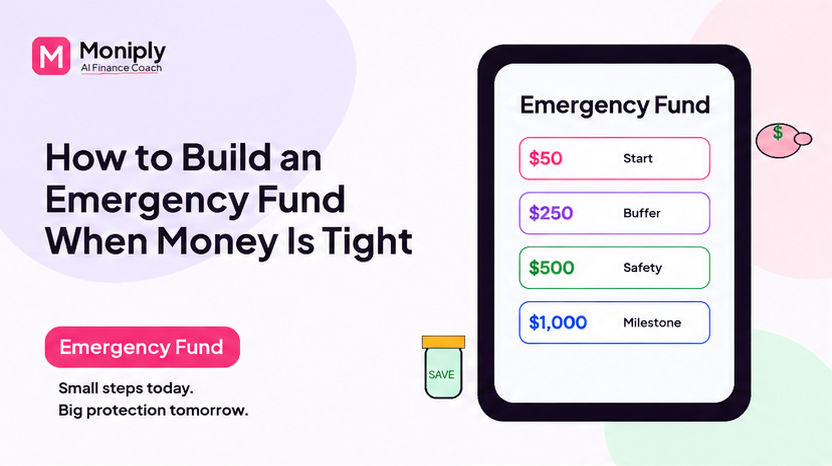
An emergency fund sounds like something you build when life is comfortable. But in reality, emergency savings are most important when money is tight. A small medical bill, car repair, rent gap, job delay, family need, or urgent travel cost can turn into debt when there is no cash cushion.
The Consumer Financial Protection Bureau describes an emergency fund as a cash reserve set aside specifically for unplanned expenses or financial emergencies. This is not vacation money, shopping money, or investment money. It is protection money.
If saving feels impossible, do not start with a huge goal. Start with a small realistic milestone and connect it to your monthly budget guide. The goal is to create financial breathing room, even if the first amount is small.
Why Emergency Savings Matter
Emergency savings protect your budget from unexpected costs. Without savings, even a small problem can become a credit card balance, personal loan, late fee, or borrowed money from family.
The Federal Reserve’s household well-being data shows that only 63% of adults in 2025 would cover a $400 emergency expense using cash or its equivalent. That means many households still need stronger short-term financial protection.
An emergency fund gives you options. It can help you avoid panic decisions, stay current on bills, and protect long-term goals.
What Counts as an Emergency
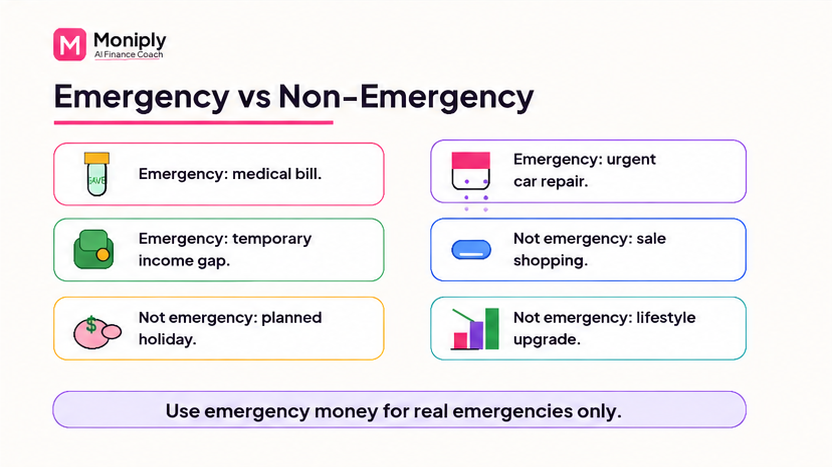
A real emergency is unexpected, necessary, and time-sensitive. Examples include medical expenses, urgent car repair, home repair, temporary loss of income, urgent family support, or essential travel caused by a crisis.
A sale, new phone, fashion trend, planned holiday, or regular subscription is not an emergency. If you use emergency savings for non-emergencies, the fund will not be available when you need it.
Start With Small Milestones
The biggest mistake is believing an emergency fund must begin with three to six months of expenses. That is a useful long-term goal, but it can feel impossible at the start.
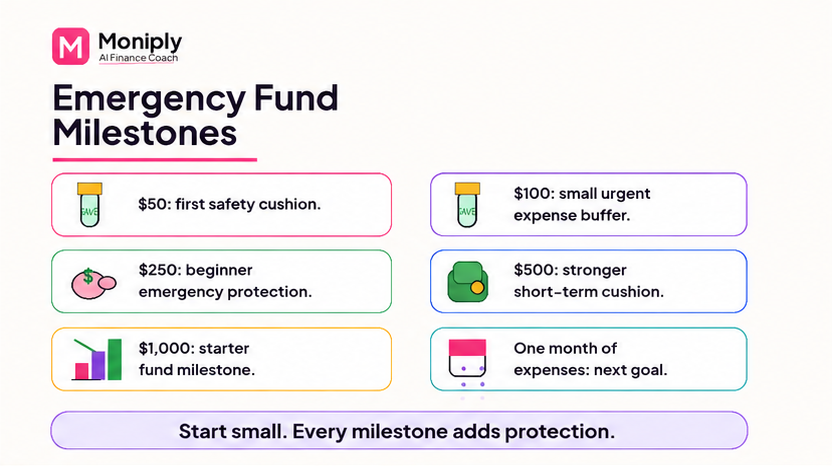
Use small milestones instead: $50, $100, $250, $500, $1,000, one month of expenses, then three months. Each milestone gives more protection than the previous one.
If your budget is very tight, your first goal may be only $50. That is still progress. A $50 fund can cover a small medicine cost, transport emergency, or urgent bill gap.
How to Save When Money Is Tight
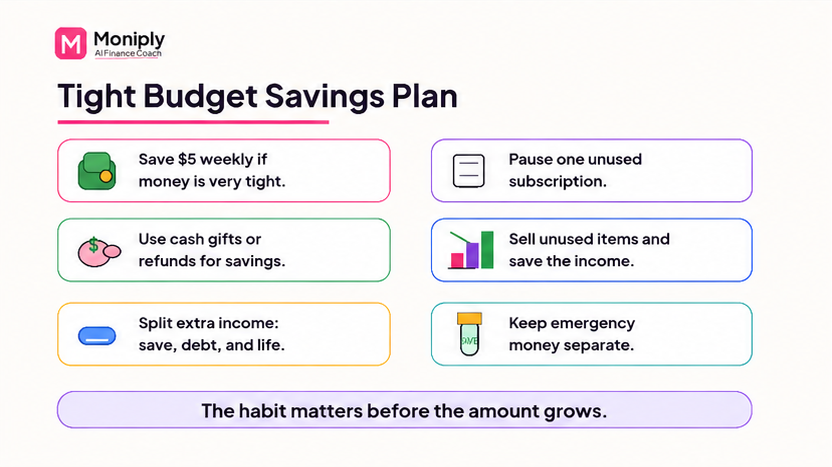
Start by choosing a tiny automatic amount. It could be $5 per week, $10 per paycheck, or 1% of income. The point is to build the habit before increasing the amount.
Next, review spending categories inside your budget dashboard. Look for small leaks: unused subscriptions, food delivery, impulse purchases, frequent rideshares, convenience fees, and duplicate services.
Use temporary savings rules. For 30 days, pause one nonessential category and send the amount to your emergency fund. The goal is not to live with no joy forever. The goal is to create a safety cushion.
Use a Separate Savings Place
Emergency money should be easy to access but not too easy to spend. Keep it separate from your normal checking account if possible. A separate savings account, cash envelope, or dedicated digital wallet can create distance between everyday spending and emergency protection.
Do not invest emergency money in risky assets. Emergency savings should be stable and available when needed.
Make Your Emergency Fund Visible
A savings goal works better when it is visible. Use a tracker, chart, calendar, or app to show progress. Seeing the number grow can make saving feel rewarding.
A savings goal tracker can help you set a target, add deposits, and celebrate milestones.
How to Build the Fund Faster
Use one-time money wisely. Refunds, bonuses, gifts, freelance income, overtime, selling unused items, or cashback can move your emergency fund forward quickly.
Use a split rule: 50% for the emergency fund, 30% for debt or bills, and 20% for something enjoyable. This keeps progress realistic without making life feel too restricted.
Avoid These Emergency Fund Mistakes
Do not use the fund for planned expenses. Holidays, birthdays, school fees, and annual insurance should have separate sinking funds.
Do not keep the fund in an account where you constantly see it while shopping. Visibility helps progress, but too much access can increase temptation.
Do not stop at the first milestone forever. Once you reach $500 or $1,000, keep building slowly toward one month of expenses.
Debt vs Emergency Fund: Which Comes First?
If you have high-interest debt, it is tempting to send every extra dollar to debt. But having no emergency savings can push you back into debt when surprise costs appear.
A balanced approach is to build a small starter emergency fund first, then use extra money for debt payoff. Moniply’s debt payoff coach can help you connect debt progress with savings protection.
How Moniply Helps With Emergency Savings
Moniply can help you track expenses, set savings goals, manage debt payoff, and review progress. Its expense tracker helps identify spending leaks, while the AI finance coach can help explain money patterns and suggest next steps.
Emergency savings become easier when the goal is connected to your real budget. Moniply keeps that picture in one place.
Emergency Fund by Age and Life Situation
For Gen Z and students, an emergency fund may begin with a small cash cushion for transport, phone bills, medicine, or urgent school needs. The first goal is not perfection; it is avoiding panic when small surprises happen.
For single parents and families, emergency savings should protect essentials first: rent, groceries, childcare, school costs, transport, and medicine. A family emergency fund often needs to be larger because more people depend on the same budget.
For freelancers and self-employed workers, emergency savings are even more important because income can change month to month. A freelancer may eventually need more than three months of essential expenses because late client payments and slow seasons are common.
Seasonal Emergency Fund Planning
Some emergencies are not fully random. Winter can bring heating costs, illness, transport issues, and home repairs. Summer can bring travel pressure, higher utility bills, school holidays, and family events. Back-to-school season can create clothing, books, supplies, and fee pressure.
Plan seasonal buffers before the season begins. If winter usually increases your costs, start a small winter buffer in autumn. If summer travel creates stress, create a travel sinking fund so the emergency fund is not used for planned vacations.
This separation matters. Emergency funds are for true surprises. Seasonal funds are for predictable pressure.
What to Cut Without Feeling Deprived
When money is tight, the goal is not to remove every enjoyable expense. That usually creates budget burnout. Instead, cut the expenses that provide the lowest value. These may include unused subscriptions, duplicate apps, frequent convenience purchases, delivery fees, or impulse shopping.
Use the one-category rule: choose one category to reduce for 30 days. Send that exact amount to emergency savings. If you try to cut everything at once, the plan may feel impossible. If you cut one category, it feels manageable.
Small changes can matter. Saving $10 per week creates about $520 in one year. Saving $25 per week creates about $1,300 in one year. The habit is more important than the starting amount.
When to Use the Emergency Fund
Use emergency savings when the expense is necessary, unexpected, and urgent. Medical costs, urgent car repairs, essential home repairs, temporary income loss, and emergency travel may qualify. A planned sale, new gadget, or lifestyle upgrade should not qualify.
After using the fund, do not feel guilty. That is why the fund exists. The next step is to rebuild it using the same small automatic system.
If you are unsure whether something is an emergency, wait 24 hours when possible. This pause can separate urgency from impulse.
Emergency Fund for Different Income Types
If you have a fixed salary, emergency fund planning can be simple. Choose a set amount per paycheck and transfer it before spending on wants. Even a small automatic transfer builds consistency because it removes the decision from your daily mood.
If you have irregular income, use percentages instead of fixed amounts. For example, save 5% of every payment you receive until your starter fund is complete. In high-income months, save more. In low-income months, protect essentials first and keep the habit alive with a tiny amount.
If you receive cash income, create a cash rule. Every time you receive cash, put a small fixed portion into an emergency envelope before using the rest. This makes cash visible instead of disappearing into daily spending.
Emergency Fund and Family Support
Many people support parents, siblings, children, or extended family. This can make saving harder because financial needs appear suddenly. If family support is part of your life, plan a family-support category separately from your emergency fund.
This separation protects both goals. You can help family when possible without destroying the savings that protects your rent, food, transport, and health. If the two categories are mixed, the emergency fund may never grow.
Be realistic and kind to yourself. A person with family responsibilities may build savings more slowly, but slow progress is still progress.
Monthly Routine to Keep the Fund Growing
At the start of each month, decide the emergency fund deposit. In the middle of the month, check whether the money is still untouched. At the end of the month, review whether you can add anything extra.
If you miss a month, do not restart from zero emotionally. Continue the next month. Emergency saving is a long-term habit, not a one-time challenge.
Once your first milestone is reached, set the next milestone immediately. If you pause too long after reaching $500 or $1,000, the fund may stop growing.
The Most Important Rule: Rebuild After Using It
An emergency fund is not a decoration. It is meant to be used when life creates a real emergency. If you use it for a medical bill, urgent repair, or temporary income gap, the fund has done its job.
After the emergency passes, return to rebuilding mode. Use the same small automatic deposits, one-category cuts, and extra-income rules. This rebuild habit is what keeps the emergency fund useful year after year.
FAQ
How much should I have in an emergency fund? Start with a small starter goal such as $250, $500, or $1,000. Over time, work toward one to three months of essential expenses, then more if your income is unstable.
Can I build an emergency fund with low income? Yes. Start with tiny automatic savings and use small windfalls. The habit matters first.
Where should I keep emergency savings? Keep it somewhere safe, separate, and accessible. Avoid risky investments for emergency money.
Should I use emergency savings to pay debt? Usually not. Emergency savings protect you from new debt. Use a separate debt payoff plan for regular payments.
What if I use the fund? That means the fund worked. Rebuild it with the same small-step system.
Financial Disclaimer
This article is for educational purposes only and does not provide personal financial, legal, tax, or investment advice. Emergency fund needs depend on income, expenses, family responsibilities, job stability, location, and personal risk. Consider speaking with a qualified professional for major decisions.
Final Thoughts
Building an emergency fund when money is tight is not easy, but it is possible. Start smaller than you think. Save consistently. Keep the money separate. Use it only for real emergencies. Rebuild it when life happens.
The first $50 matters. The first $100 matters. The first $500 matters. Small savings can create real peace of mind.
Create a savings plan from this guide
Set a realistic monthly target, track progress, and use Moniply tools to stay consistent.
Get the Moniply AI Finance Coach app
Moniply is building an Android app that turns budgeting, savings, debt payoff, and money decisions into simple AI-guided next steps.

Author: M.Adil
Finance professional and Moniply founder. Moniply helps everyday people use simple tools, practical guides, and AI-style money coaching to budget, save, and make calmer financial decisions.