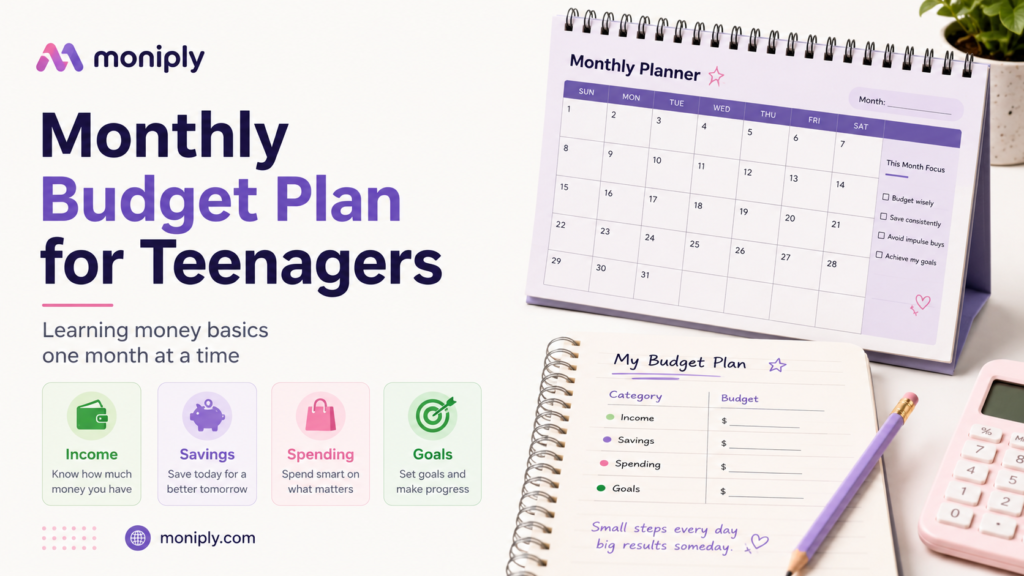
Learning to budget as a teenager is not about restricting every fun purchase. It is about learning how to make choices before money disappears. Whether your income comes from an allowance, gifts, part-time work, freelancing, chores, or a small online business, a simple monthly plan can help you save for goals, spend without guilt, and avoid common money mistakes.
Why Teenagers Should Learn Budgeting Early
Money habits often begin long before adulthood. A teenager who learns to track income, separate needs from wants, save consistently, and review spending develops skills that make future decisions easier.
Budgeting also builds independence. Instead of asking where all the money went, you begin deciding where it should go before the month starts.
A budget is not a punishment. It is a plan that gives your money a purpose.
Step 1: Calculate Your Monthly Income
Write down every reliable source of money you expect during the month. This may include allowance, part-time wages, gifts, tutoring, online work, selling crafts, or payments for chores.
Use take-home income—the amount you actually receive after any deductions. Do not budget money that has not arrived yet.
If your income changes from month to month, use a conservative estimate based on your lowest recent month.
Step 2: Save Before You Spend

Choose a small percentage or fixed amount to save as soon as money arrives. Twenty percent is a useful starting point, but the best amount is one you can repeat.
Divide savings into two simple goals: a short-term goal and a longer-term safety fund.
Use the Moniply Savings Goal Calculator to estimate how much to save each month.
Step 3: Separate Needs, Wants, and Goals
Needs support school, work, health, transport, communication, or essential responsibilities.
Wants are enjoyable extras such as gaming, snacks, fashion, entertainment, subscriptions, and social activities.
Goals are things you are intentionally saving for.
A Simple Teen Budget Formula
A beginner-friendly formula is 60% for everyday spending, 20% for savings, and 20% for goals or giving.
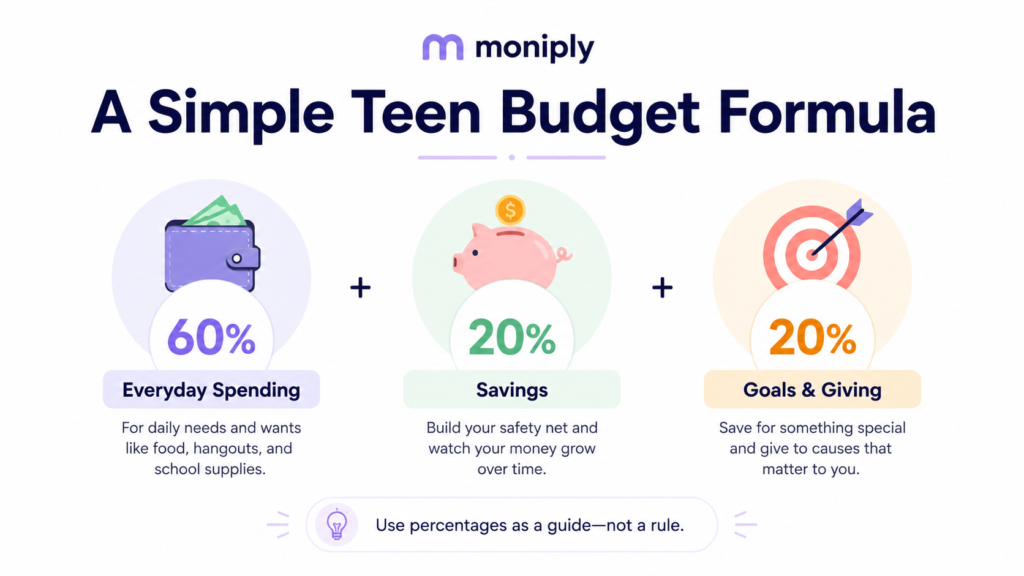
This is only a guide. Adjust it based on your real responsibilities.
The purpose is not to force perfect percentages. It is to create a repeatable plan.
Monthly Budget Example
Suppose a teenager receives $250 during the month.
Income: $250. Savings: $50. Everyday spending: $150. Goals or giving: $50.
Within everyday spending, create smaller limits for transport, food, school items, entertainment, and personal purchases.
Step 4: Track Spending Without Obsessing
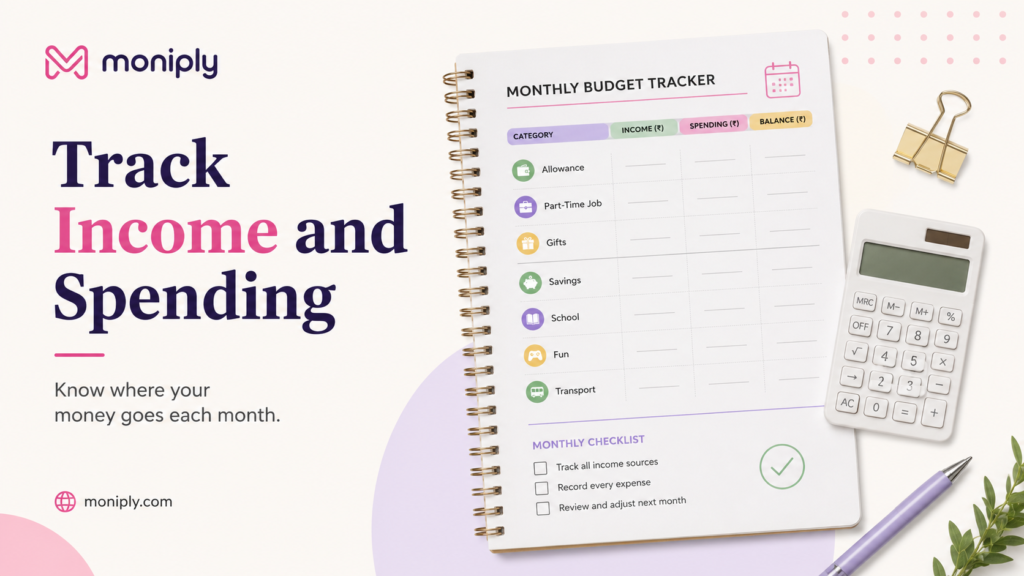
Record each purchase in a budgeting app, spreadsheet, or notebook. Choose the method you will actually use.
Check spending once or twice each week. The goal is awareness rather than constant worry.
Group similar purchases together so patterns become easier to see.
Step 5: Build One Money Goal at a Time
Choose one specific goal with a target amount and deadline.
Divide the target by the number of months available.
Keep the goal visible so progress feels real.
Common Teen Budgeting Mistakes
- Spending first and saving whatever remains.
- Counting expected money before it arrives.
- Using buy-now-pay-later services without understanding repayment.
- Making a budget that leaves no room for fun.
- Giving up after one overspending week.
- Copying someone else’s budget without considering your own responsibilities.
How Parents and Guardians Can Help
Parents can explain household costs, help teenagers compare prices, and encourage saving without controlling every purchase.
A useful approach is to let teenagers make small mistakes while the consequences are manageable.
Families can agree on which expenses the teenager is responsible for and which remain household costs.
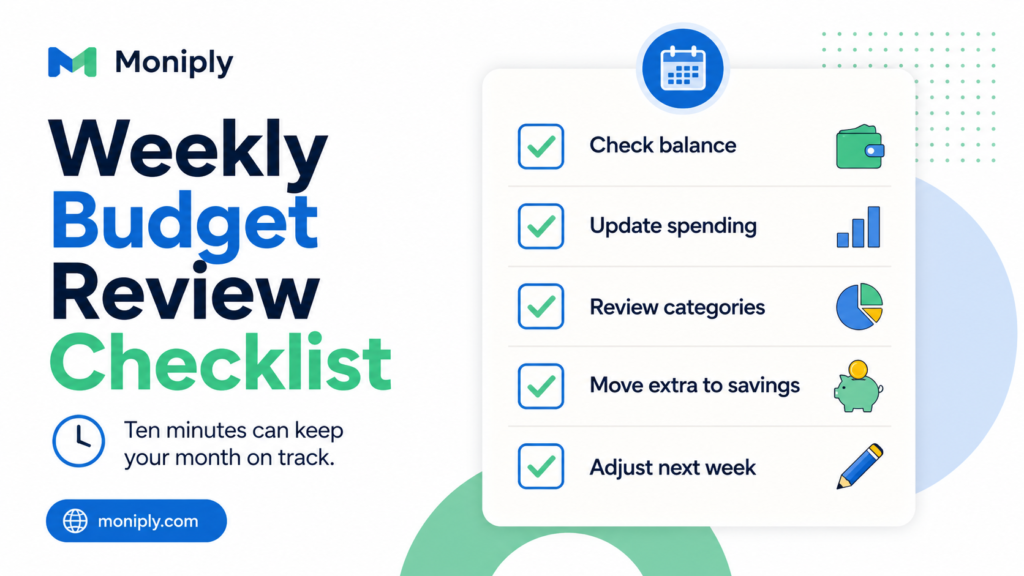
Your 10-Minute Weekly Money Review
- Check your current balance.
- Update any missing transactions.
- Compare spending with category limits.
- Move unused money toward savings or goals.
- Choose one adjustment for the coming week.
- Celebrate progress, even when the amount is small.
When to Adjust the Budget
Adjust your plan when income changes, school starts, transport costs rise, a new job begins, or a major goal becomes more important.
A budget should change with your life. Reviewing and adjusting is a sign that the plan is working, not failing.
Build Your First Budget
Use the Moniply Budget Calculator and Savings Goal Calculator.
Frequently Asked Questions
How much should a teenager save each month?
A practical starting point is 10% to 20% of income, but consistency matters more than a perfect percentage.
What is the best budget method for teenagers?
A simple three-part plan—spending, saving, and goals—is easier to maintain than a complicated system.
Should teenagers have an emergency fund?
Yes. Even a small buffer can help with transport, school items, phone repairs, or other unexpected costs.
Can a teenager budget without a bank account?
Yes. A notebook, spreadsheet, envelope system, or supervised prepaid account can work.
How often should a teen review a budget?
A short weekly review and a fuller monthly review are usually enough.
Is the 50/30/20 rule good for teenagers?
It can be a useful guide, but teenagers should adjust it based on which expenses they are responsible for.
Disclaimer: Educational content only.
Turn this article into a monthly budget
Start with income, fixed costs, flexible spending, and one savings target. Then review your numbers in the dashboard.
Get the Moniply AI Finance Coach app
Moniply is building an Android app that turns budgeting, savings, debt payoff, and money decisions into simple AI-guided next steps.

Author: M.Adil
Finance professional and Moniply founder. Moniply helps everyday people use simple tools, practical guides, and AI-style money coaching to budget, save, and make calmer financial decisions.