Paying off debt can feel confusing because every method sounds urgent. One person says to attack the smallest balance first. Another says to pay the highest interest rate first. A third person says to consolidate everything, while a fourth says to cut every expense until the debt disappears. For a beginner, the noise can make debt feel even heavier.
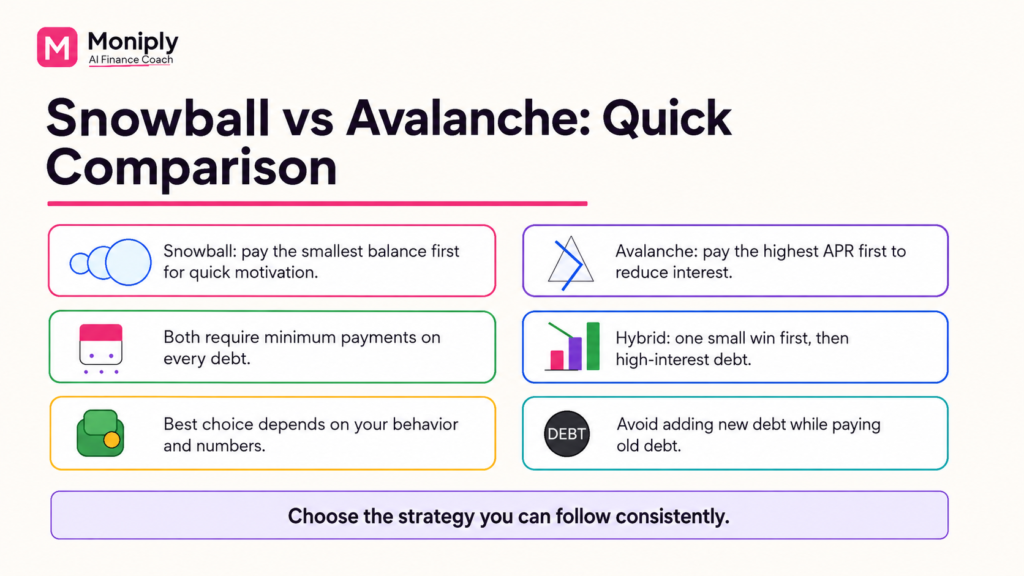
The good news is that debt payoff does not need to be complicated. The two most common strategies are the debt snowball and the debt avalanche. The snowball method focuses on quick wins by paying the smallest balance first. The avalanche method focuses on interest savings by paying the highest interest rate first.
Both methods can work. The best method is the one that fits your numbers and your behavior. If you need motivation, the snowball method may help. If you want to minimize interest, the avalanche method may be better. This guide explains both strategies clearly, shows examples, and helps you choose a debt payoff plan that you can actually follow.
Before starting, connect your payoff plan to your monthly budget guide. Debt payoff works best when the extra payment is planned before the month begins.
What Debt Payoff Really Means
Debt payoff means creating a structured plan to reduce and eventually eliminate money you owe. It can include credit cards, personal loans, student loans, auto loans, medical bills, family loans, or buy-now-pay-later balances.
The goal is not only to pay balances down. The bigger goal is to improve cash flow, reduce stress, avoid future high-interest borrowing, and free money for savings, investing, travel, family, education, or business goals.
A good debt payoff plan has four parts: a complete debt list, minimum payments, an extra payment amount, and a clear order for attacking debts. Without these four parts, debt repayment usually becomes random.
The Two Most Popular Debt Payoff Strategies
The Consumer Financial Protection Bureau describes two basic ways to reduce debt: the highest-interest-rate method and the snowball method. The highest-interest-rate method is commonly called the debt avalanche. The snowball method focuses on the smallest balance first.
Both strategies require the same foundation: keep making minimum payments on every debt so you avoid late fees, penalties, and credit damage. Then apply any extra money to one target debt at a time.
Debt Snowball Method Explained
The debt snowball method means you list your debts from smallest balance to largest balance. You pay minimum payments on all debts, then put every extra amount toward the smallest balance. Once that debt is gone, you roll its payment into the next smallest debt.
The benefit is psychological. Paying off a small balance quickly can create momentum. Many people need that emotional win because debt payoff can otherwise feel slow and invisible.
The weakness is that snowball may cost more interest if your larger debts have higher rates. Still, if quick wins keep you consistent, the snowball method can be the more realistic strategy.
Debt Avalanche Method Explained
The debt avalanche method means you list your debts by interest rate, from highest APR to lowest APR. You pay minimum payments on all debts, then put extra money toward the highest-interest debt first.
The benefit is mathematical. High-interest debt grows faster, so attacking it first can reduce total interest over time. This can be especially powerful for credit card balances.
The weakness is motivation. If the highest-interest debt is also a large balance, it may take longer to see a debt fully disappear. Some people give up before the avalanche savings appear.
Debt Payoff Example
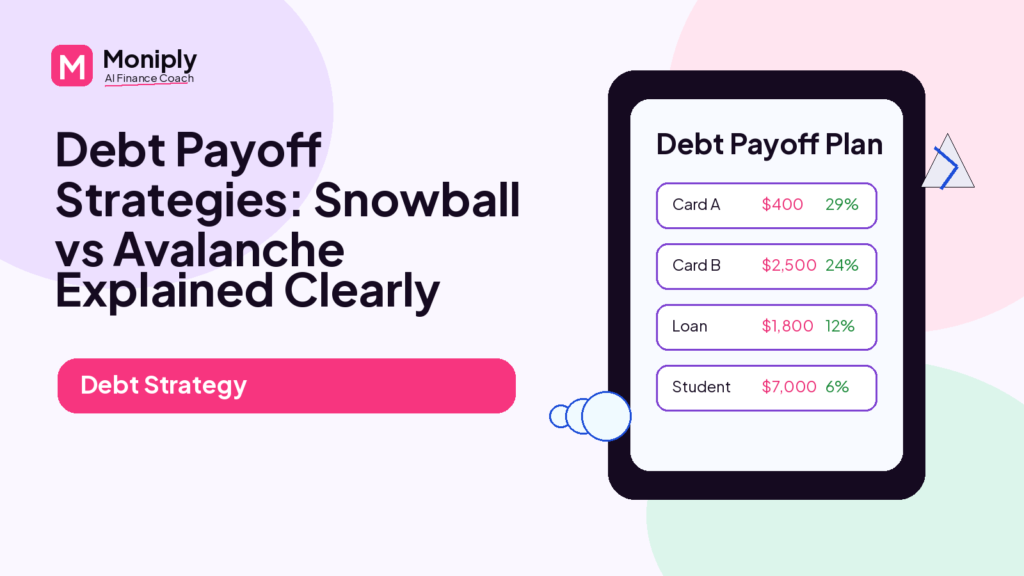
Imagine you have four debts. A store card has a $400 balance at 29% APR. A credit card has a $2,500 balance at 24% APR. A personal loan has a $1,800 balance at 12% APR. A student loan has a $7,000 balance at 6% APR.
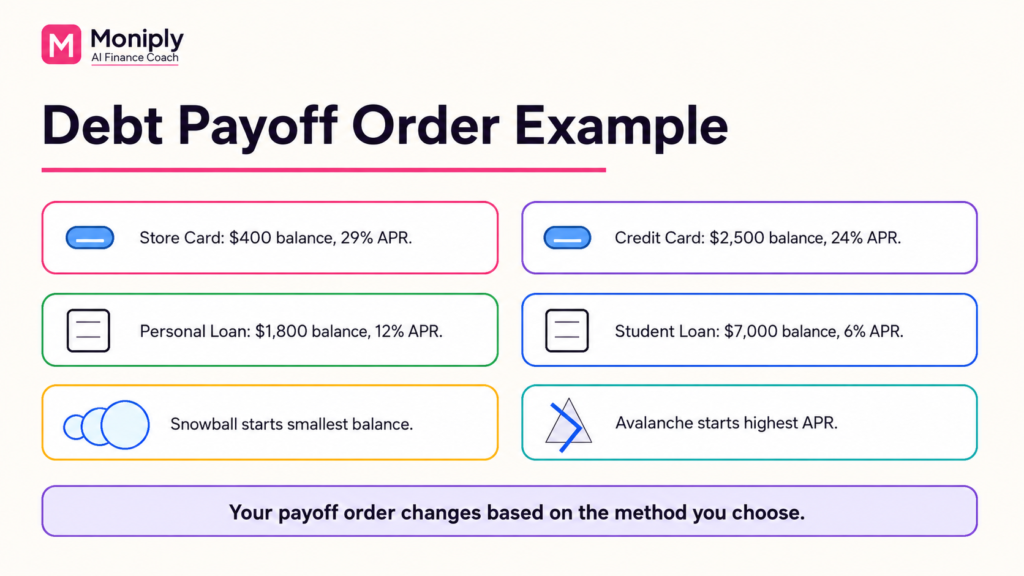
With snowball, you start with the $400 store card because it is the smallest balance. With avalanche, you also start with the store card because it has the highest APR. But the second debt would differ: snowball would target the $1,800 personal loan, while avalanche would target the $2,500 credit card.
This example shows why there is no single answer. Sometimes both methods begin with the same debt. Sometimes they create very different payoff orders.
Image Title: Debt Payoff Order Example
Suggested Placement: After section: Debt Payoff Example
File Name: article_graphic_02_debt_payoff_order_example_1600x900.png
Alt Text: Debt payoff order example showing balances, APRs, minimum payments, and extra payment strategy.
How to Choose the Right Strategy
Choose the snowball method if you feel overwhelmed, have many small balances, need quick progress, or have struggled to stay motivated before. Choose avalanche if you are disciplined, have high-interest debt, and want the mathematically efficient route.
You can also use a hybrid strategy. For example, pay off one very small balance first for motivation, then switch to avalanche for the remaining debts. This gives you a quick win without ignoring interest costs forever.
The right plan should be simple enough that you can explain it in one sentence. If your plan is too complicated, you are less likely to follow it.
Step-by-Step Debt Payoff Plan
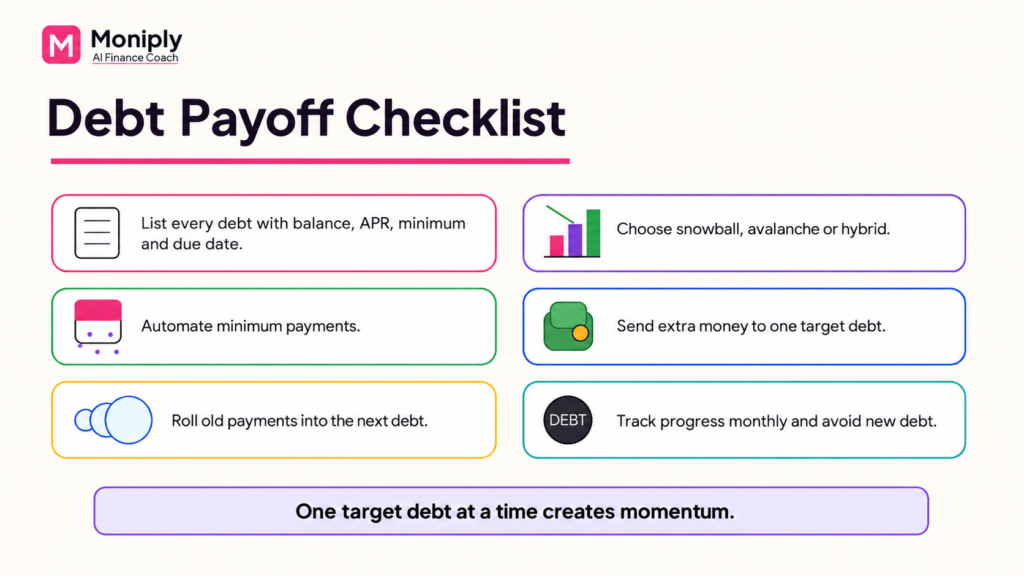
Step one: list every debt with balance, APR, minimum payment, due date, and lender. Use your budget dashboard or a spreadsheet so the numbers are visible.
Step two: make minimum payments automatic if possible. Late payments can create fees and damage your progress.
Step three: decide how much extra money you can pay every month. This should come from your real budget, not wishful thinking.
Step four: choose snowball, avalanche, or a hybrid method. If you want guided comparison, use Moniply’s debt payoff coach inside the dashboard.
Step five: focus on one target debt at a time. Scattering extra payments across every debt can slow visible progress.
Step six: after each debt is paid, roll that payment into the next target. This is where momentum grows.
Step seven: avoid adding new debt while paying old debt. A payoff plan fails when new balances replace old balances.
How to Find Extra Money for Debt Payoff
Start by reviewing flexible spending: food delivery, subscriptions, shopping, entertainment, rideshares, travel, and impulse purchases. A simple expense tracker can reveal leaks without requiring perfection.
You do not need to cut everything. Choose two or three categories where spending is easiest to reduce. Then assign those savings to your debt target immediately.
If income is irregular, use extra income carefully. Freelance income, bonuses, refunds, gifts, or overtime can be powerful when directed to one target debt instead of absorbed into normal spending.
Common Debt Payoff Mistakes
One mistake is paying only minimums without a target plan. This can keep balances alive for years, especially on high-interest cards.
Another mistake is ignoring emergency savings. If you have no cash cushion, one small emergency may push you back into debt. A small starter emergency fund can protect your payoff plan.
A third mistake is using debt consolidation without changing habits. Consolidation may lower payments, but if spending continues, the old debt can return alongside the new loan.
How Moniply Helps With Debt Payoff
Moniply can help you organize debt balances, track monthly payments, compare payoff strategies, and connect debt goals with your overall money plan. The AI finance coach can help explain spending patterns, while the net worth tracker helps show how debt reduction improves your financial position over time.
A debt payoff strategy should not exist separately from your budget. Moniply keeps income, spending, debt, goals, and progress in one place so the plan is easier to follow.
Image Title: Debt Payoff Checklist
Suggested Placement: Before FAQ section
File Name: article_graphic_03_debt_payoff_checklist_1600x900.png
Alt Text: Debt payoff checklist with steps to organize debts, choose strategy, pay extra, and avoid new debt.
How to Create a Complete Debt List
A debt payoff strategy becomes stronger when every debt is visible. Start by writing the lender name, balance, interest rate, minimum payment, due date, account status, and whether the rate is fixed or variable. This one list can remove a lot of confusion because your mind stops trying to remember everything at once.
Group debts by type: credit cards, personal loans, student loans, auto loans, medical bills, family loans, and buy-now-pay-later balances. This helps you understand which debts are expensive, which debts affect your monthly cash flow, and which debts create emotional pressure.
Do not hide small debts. A $60 subscription balance, a $90 overdue bill, or a small installment payment may look harmless, but many small balances can create mental clutter. Debt payoff works better when the full picture is honest.
Debt Payoff by Age and Life Stage
In your 20s, the goal is usually to avoid building long-term high-interest debt while creating basic savings. A snowball method may help if you are new to repayment and need motivation. A high-interest card should still receive serious attention because it can grow quickly.
In your 30s and 40s, debt payoff often competes with family expenses, housing, childcare, insurance, and career growth. This is where avalanche or hybrid payoff can be useful because interest savings matter more when balances are larger.
In your 50s and above, debt payoff should be connected with retirement readiness and cash flow. Reducing high-interest debt before retirement can improve monthly flexibility, but decisions should be balanced with emergency savings and essential expenses.
What to Do After Each Debt Is Paid Off
When one debt is paid off, do not immediately absorb that payment into lifestyle spending. Roll the old payment into the next target debt. This is the part that makes both snowball and avalanche powerful.
For example, if a $75 minimum payment disappears and you were also paying $50 extra, the next target debt can receive an additional $125 per month. Over time, the payoff amount grows without needing a new raise.
After all high-interest debt is paid off, redirect the same amount to emergency savings, retirement, investing, travel goals, education, or business building. The habit that once removed debt can become the habit that builds wealth.
Monthly Debt Review Routine
Review debt once per month. Update balances, check whether payments posted correctly, review interest charges, and compare your new total balance with last month. This routine turns debt payoff into visible progress.
If the balance did not fall as expected, do not quit. Check whether fees, interest, late payments, or new spending slowed progress. Then adjust the next month instead of abandoning the strategy.
A good debt plan should create clarity, not shame. The purpose of review is to make better decisions with better information.
Frequently Asked Questions:
Is debt snowball or avalanche better? Avalanche usually saves more interest, while snowball may be easier to follow because it creates quicker wins. The best method is the one you can continue consistently.
Should I save money or pay debt first? Many people benefit from a small starter emergency fund before aggressive debt payoff. This helps prevent new debt from emergencies.
Which debt should I pay first? If using snowball, pay the smallest balance first. If using avalanche, pay the highest APR first.
Can I combine snowball and avalanche? Yes. A hybrid plan can start with one small debt for motivation and then move to high-interest debts.
Should I close credit cards after paying them off? Not always. Closing accounts can affect credit history and available credit. Consider your situation before closing accounts.
Financial Disclaimer
This article is for educational purposes only and does not provide personal financial, legal, tax, or credit advice. Debt decisions depend on interest rates, income, credit terms, and personal circumstances. Consider speaking with a qualified financial or credit professional before making major debt decisions.
Final Thoughts
Debt payoff is not about finding a perfect strategy. It is about choosing a clear strategy and following it long enough to see progress.
The snowball method helps you build momentum. The avalanche method helps you save interest. A hybrid method can give you both motivation and efficiency.
Start with your real numbers, choose your target debt, pay minimums on everything, add extra to one balance, and keep going. Small consistent payments can create big financial freedom over time.
Build your debt payoff plan
Compare payoff methods, check your monthly capacity, and turn this article into a step-by-step action plan.
Get the Moniply AI Finance Coach app
Moniply is building an Android app that turns budgeting, savings, debt payoff, and money decisions into simple AI-guided next steps.

Author: M.Adil
Finance professional and Moniply founder. Moniply helps everyday people use simple tools, practical guides, and AI-style money coaching to budget, save, and make calmer financial decisions.