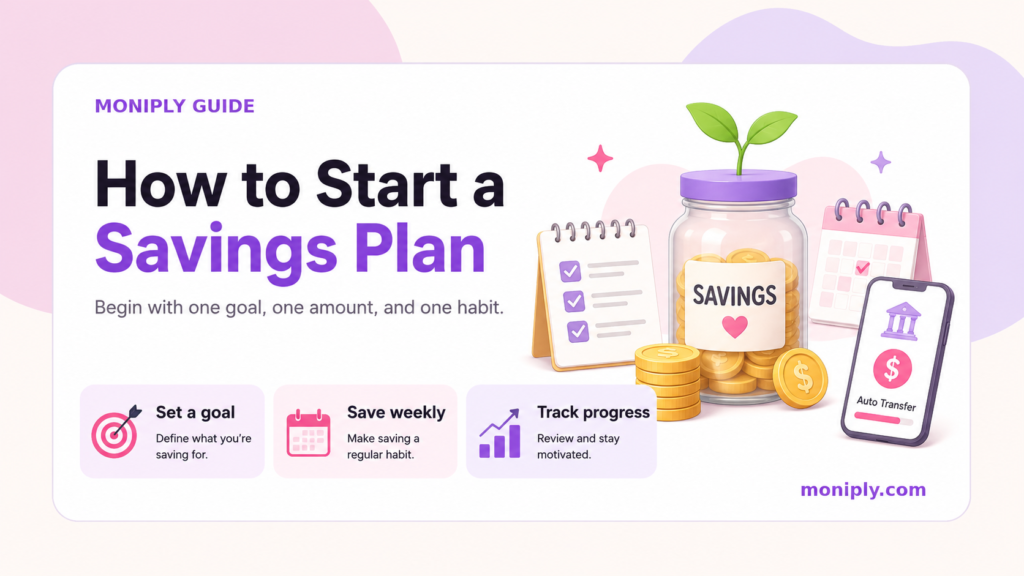
Starting a savings plan is less about finding a perfect percentage and more about creating a system you can repeat. A useful plan answers five questions: what are you saving for, how much do you need, when do you need it, where will you keep the money, and what automatic action will move you forward each month. Once those decisions are made, saving becomes a regular part of your budget rather than an occasional intention.
What Is a Savings Plan?
A savings plan is a written system for moving money toward a specific purpose. It connects a goal, a target amount, a deadline, a regular contribution, and a suitable place to keep the money.
The goal may be an emergency cushion, annual bills, a move, a vehicle, education, travel, a home deposit, or a major purchase. Different goals may need different timelines and accounts.
A savings plan is not the same as simply having money left in a checking account. Unassigned money is easy to spend. A named goal and scheduled transfer make the intention visible.
Why Starting Small Works Better Than Waiting
Many people delay saving because the amount they can afford feels too small. The first purpose of a small deposit is not to create instant wealth. It is to establish the behavior.
A transfer of $10, $25, or $50 may appear modest, but a repeatable amount can be increased after a raise, debt payoff, reduced bill, tax refund, bonus, or improved budget.
Moniply provides savings and compound-interest calculators that illustrate how regular contributions and time can affect long-term growth. Calculators are estimates rather than guarantees, but they can make a distant goal easier to understand.
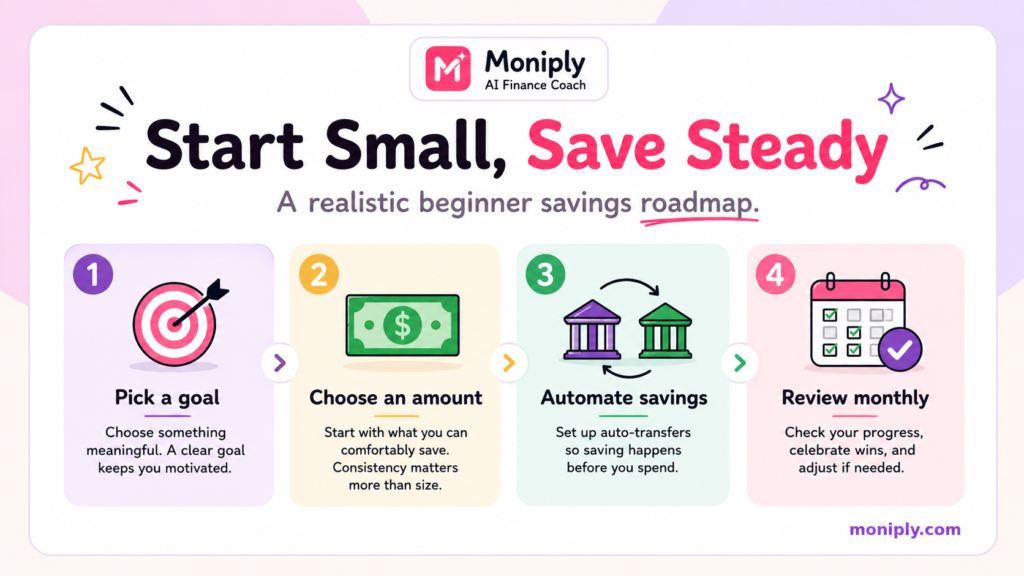
Step 1: Choose One Clear Savings Goal
Begin with one priority. Trying to fund an emergency reserve, vacation, home deposit, new phone, wedding, and investment account at the same time can divide attention and slow visible progress.
Write the goal in a measurable format: I want to save $1,500 for a moving fund by March next year. A clear target makes it possible to calculate a monthly contribution.
Choose a goal that improves your financial stability or matters enough to keep you motivated. When the reason is vague, everyday spending usually wins.
Step 2: Calculate the Monthly Savings Amount
Subtract your current savings from the target, then divide the remaining amount by the number of months before the deadline.
For example, a $2,400 target over twelve months requires an average of $200 per month. A $600 target over ten months requires $60 per month.
Use the Moniply Savings Goal Calculator to test different deadlines and monthly contributions. Extending the timeline may make the plan more realistic without abandoning the goal.
If the calculated amount does not fit your budget, reduce the target, extend the deadline, increase income, or combine several smaller changes.
Step 3: Check Your Current Financial Position
Review take-home income, essential bills, minimum debt payments, irregular expenses, and current savings before selecting the final monthly amount.
Use the Moniply Budget Calculator or Budget Dashboard to see how much money is available after core needs. A contribution that repeatedly causes overdrafts or new credit-card debt is not sustainable.
If cash flow is tight, begin with a starter amount and focus on the first milestone rather than the final goal.
Step 4: Choose the Right Place to Keep the Money
Short-term savings usually need safety, liquidity, and clear separation from daily spending. Account names and protections vary by country.
Compare access, fees, minimum balances, withdrawal rules, interest or profit rates, digital security, and deposit protection. For U.S. readers, confirm whether a bank is FDIC-insured or a credit union account is federally insured through the NCUA.
Do not place money needed soon into an investment that can lose value at the time you need to withdraw it. Investing may be appropriate for longer-term goals when you understand the risks and can tolerate market changes.
Step 5: Automate Savings on Payday
Automation removes the need to make the same decision every month. Schedule the transfer shortly after income arrives, while keeping enough money in checking for bills and normal cash-flow timing.
You can use an automatic bank transfer, split direct deposit, scheduled standing order, or payroll feature when available.
Begin with an amount that can survive an ordinary month. A smaller transfer that continues is more useful than an aggressive transfer that is cancelled repeatedly.
Step 6: Build Savings Into the Budget
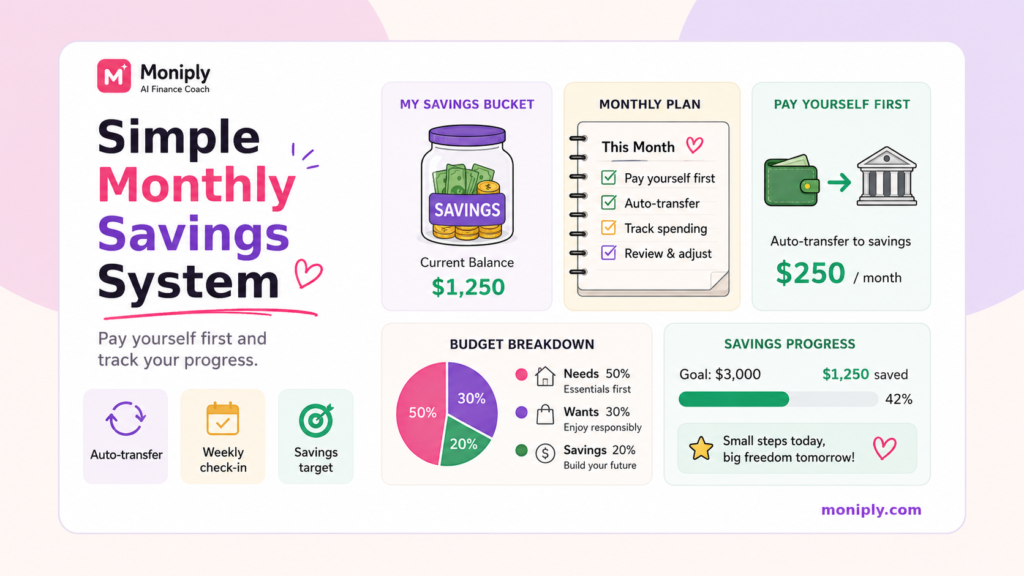
Treat savings as a planned category rather than whatever remains after spending. This does not mean ignoring essential needs or required debt payments.
A percentage method such as 50/30/20 can provide a starting structure, but it should be adjusted to your housing costs, income, dependents, debt, healthcare needs, and local cost of living.
When percentages do not fit, use a fixed amount. Saving $40 every payday is still a complete savings plan when it matches your real budget.
Step 7: Reduce One Low-Value Expense
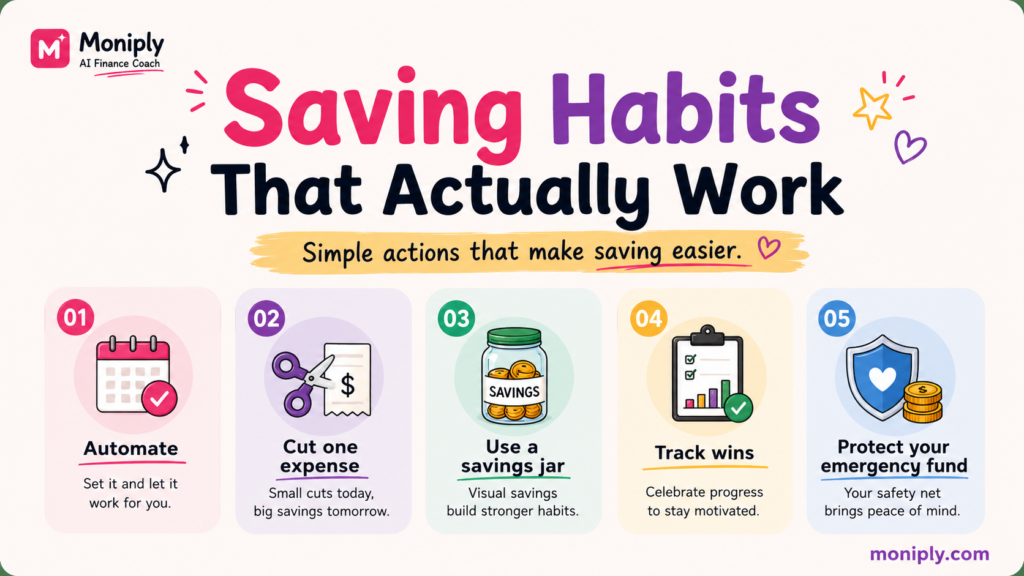
Do not try to cut every enjoyable purchase. Find one recurring expense that provides less value than the savings goal.
Examples include an unused subscription, frequent delivery fees, repeated impulse purchases, convenience charges, or a service that can be downgraded.
Redirect the exact amount to savings. This makes the benefit visible: cancelling a $20 subscription becomes a $240 annual contribution.
Create Separate Savings Buckets
One account can contain several named buckets when the bank or budgeting system supports them. Otherwise, separate accounts or a tracking sheet can help.
Useful buckets include emergencies, annual bills, vehicle or home maintenance, travel, education, gifts, and major purchases.
Do not treat expected annual expenses as emergencies. Saving gradually for insurance renewals, school costs, holidays, repairs, and professional fees protects the emergency fund.
Build an Emergency Fund in Stages
An emergency fund is designed for genuine financial shocks such as essential repairs, urgent travel, medical costs, or loss of income.
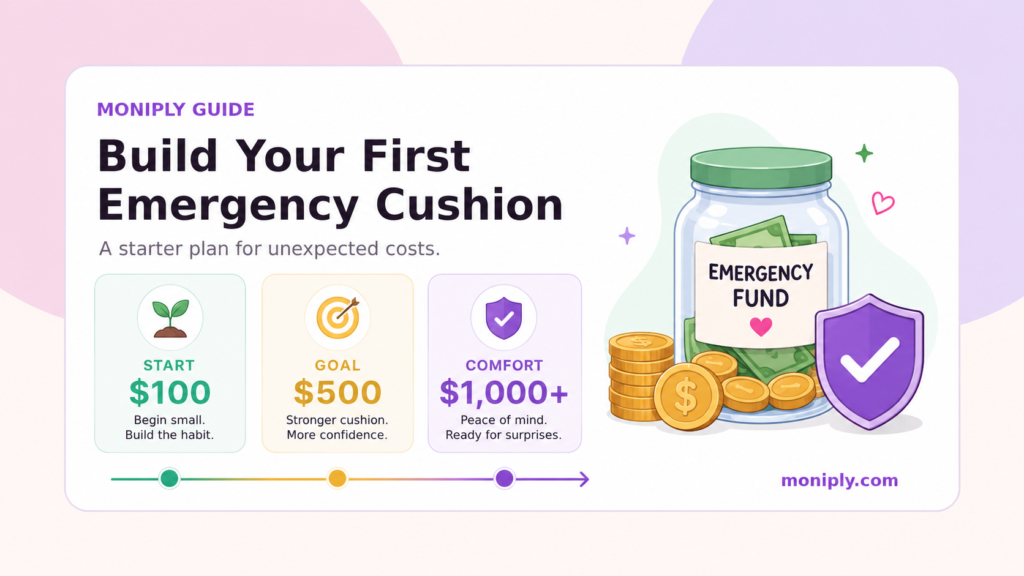
Start with a small cushion, then aim for one essential bill, one month of core expenses, and eventually a larger reserve based on job stability, dependents, health risks, insurance, and support systems.
The Federal Reserve’s Survey of Household Economics and Decisionmaking tracks how households manage unexpected expenses, underscoring why accessible emergency savings is an important part of financial resilience.
Use the Moniply Emergency Fund Calculator to estimate a target based on your essential monthly expenses.
How to Start a Savings Plan When Income Is Irregular
When income changes each month, use a percentage of every payment rather than one fixed monthly transfer.
Build the budget from a conservative income estimate, cover essential bills, and transfer a chosen percentage when money arrives.
During higher-income months, add more to the buffer. During lower-income months, maintain the habit with a smaller contribution instead of treating the plan as a failure.
How to Balance Savings and Debt
Required debt payments must remain current. At the same time, having no cash buffer can send a minor emergency back onto a credit card.
A balanced approach may involve building a small starter emergency fund while paying minimums, then directing more money toward expensive debt.
Use the Moniply Debt Payoff Calculator to compare repayment strategies. Personalized debt decisions may require a qualified nonprofit counselor or financial professional.
A 30-Day Savings Plan for Beginners
Week 1: Choose the goal, target amount, and deadline. Review the last month of spending and select a starter contribution.
Week 2: Open or designate a separate savings account. Make the first transfer immediately, even when it is small.
Week 3: Set up automation and remove one low-value expense. Redirect the saved amount.
Week 4: Review the balance, upcoming bills, and cash flow. Confirm, increase, or reduce the next transfer so the plan remains realistic.
The 10-Minute Monthly Savings Review
- Confirm the current balance.
- Record automatic transfers, manual deposits, and withdrawals.
- Compare progress with the goal and deadline.
- Check whether the account still meets your needs.
- Plan the next transfer.
- Celebrate consistency before choosing one improvement.
Common Savings Plan Mistakes
- Setting an unrealistic monthly amount.
- Keeping savings in the same spending account.
- Trying to fund too many goals at once.
- Ignoring irregular annual expenses.
- Withdrawing from savings for ordinary overspending.
- Choosing an account based only on an advertised rate.
- Giving up after one difficult month.
- Investing short-term emergency money without understanding the risk.
When to Update the Plan
Review the plan after a raise, job change, move, new dependent, major medical event, debt payoff, benefit change, or new financial priority.
You should also review the goal when the account balance, rate, fees, withdrawal rules, or deposit protection changes.
Adjusting a savings plan is not failure. The plan should change when your life changes.
Build Your Savings Plan
Set the target with the Savings Goal Calculator, test the contribution with the Budget Calculator, and track the plan in the Budget Dashboard.
Related Moniply Guides
- 50/30/20 Budget Rule
- Emergency Fund Guide
- Monthly Budget Checklist
- How to Track Expenses
- Debt Payoff Strategies
- Free Money Tools
- Moniply App
Frequently Asked Questions
How much should I save each month?
Choose an amount that fits after essential bills and required debt payments. A percentage can be a guide, but a repeatable fixed amount is also effective.
What is the best savings goal for a beginner?
A small emergency cushion or one essential bill is often a practical first milestone because it can reduce reliance on credit during a surprise expense.
Where should I keep short-term savings?
Use an account that prioritizes safety, accessibility, separation from spending, reasonable fees, and applicable deposit protection. Product names and protections vary by country.
Should I save or pay off debt first?
Keep required payments current and consider building a small cash buffer before aggressively paying expensive debt. The right balance depends on rates, risks, and cash flow.
How can I save with irregular income?
Save a percentage of each payment, use a conservative income estimate, and contribute more during stronger months.
How often should I review my savings plan?
A short monthly review and a deeper review after major life or income changes are usually sufficient.
Is a high interest rate the only factor when choosing an account?
No. Also review fees, access, minimum balances, withdrawal rules, digital security, terms, and deposit protection.
Does this article provide investment advice?
No. It provides general educational information. Investing involves risk and may require personalized professional advice.
Final Takeaway
A savings plan becomes useful when it is specific, affordable, automatic, and regularly reviewed. Choose one goal, make the first transfer, protect the money from daily spending, and improve the plan gradually.
Disclaimer: This article is for general educational purposes and does not provide personalized financial, banking, investment, legal, tax, or debt advice.
Sources and Further Reading
- FDIC Money Smart financial education program
- Investor.gov Compound Interest Calculator
- Federal Reserve Survey of Household Economics and Decisionmaking
- Consumer Financial Protection Bureau savings resources
- FDIC Deposit Insurance resources
- NCUA Share Insurance information
Create a savings plan from this guide
Set a realistic monthly target, track progress, and use Moniply tools to stay consistent.
Get the Moniply AI Finance Coach app
Moniply is building an Android app that turns budgeting, savings, debt payoff, and money decisions into simple AI-guided next steps.

Author: M.Adil
Finance professional and Moniply founder. Moniply helps everyday people use simple tools, practical guides, and AI-style money coaching to budget, save, and make calmer financial decisions.