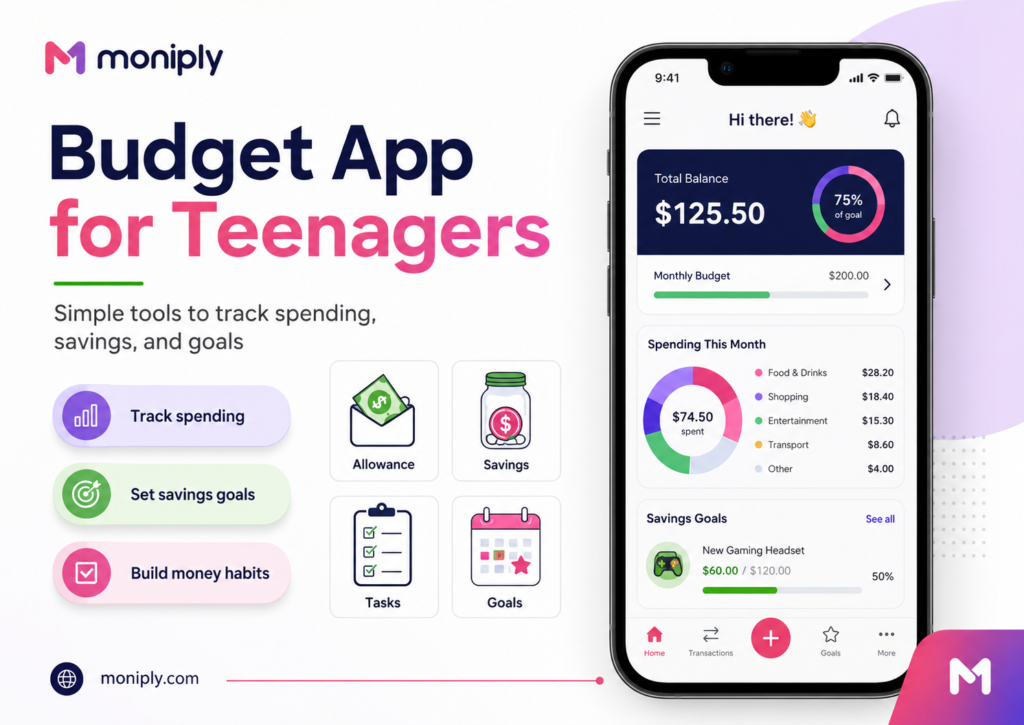
A teen budget works best when it is simple enough to use every week. A budget app for teenager money habits should not feel like adult accounting software. It should help a teen see what money comes in, decide what needs to be paid for, choose what fun spending fits the plan, and save toward one clear goal. A printable budget for teenager worksheet or budget sheet for teenager can support the same habit offline, especially when parents, guardians, teachers, or mentors want a simple way to review the plan together.
Why Teenagers Need a Budget Before They Need a Credit Card
Teenagers often start managing money through allowance, gifts, school lunch money, small jobs, online sales, tutoring, babysitting, chores, or part-time work. The amounts may be small, but the decisions are real.
A teenage budget teaches three lifelong skills: knowing what comes in, choosing where it goes, and reviewing what happened afterward.
The Consumer Financial Protection Bureau explains that developing financial knowledge, skills, and habits is an important stepping stone toward adult financial well-being. Its youth financial education resources are designed to support K-12 financial education.
The goal is not to control every teen purchase. The goal is to help teenagers practice financial decision-making while mistakes are still small and fixable.
What Should a Budget App for a Teenager Do?
A good teenage budget app should be simple, visual, private, and easy to review. It should help a teen record income, categorize spending, set a savings goal, and notice patterns.
The best app routine is usually not the one with the most features. It is the one a teenager will actually open, understand, and keep using.
Useful features include manual entry, simple categories, weekly review prompts, goal tracking, exportable worksheets, and privacy controls. For younger teens, a parent or guardian should help decide what information is safe to enter.
Budget App vs Budget Worksheet: Which Is Better for Teenagers?
A budget app is useful when a teenager wants quick tracking on a phone. A worksheet is useful when a family, class, or mentor wants a slower review process.
The strongest system often combines both. The app captures spending during the week. The worksheet turns the data into a simple conversation: what came in, what went out, what was saved, and what should change next week.
A printable budget for teenager worksheet can be used without linking bank accounts or sharing sensitive data. That makes it safer for many beginners.
The Simple Teen Budget Formula
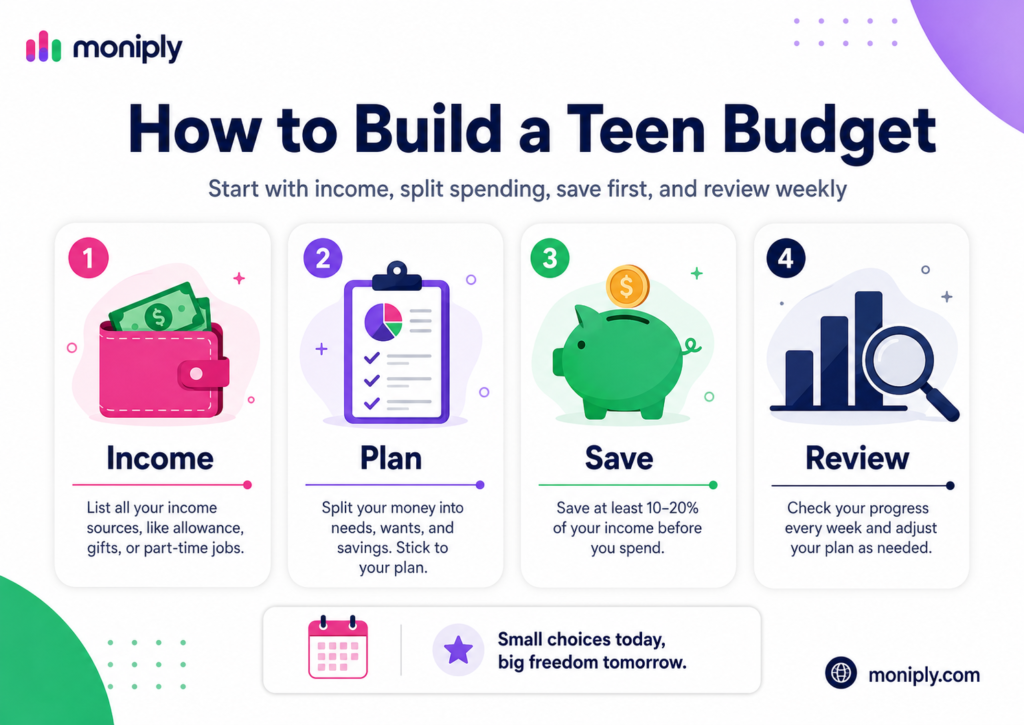
Start with four categories: money in, needs, wants, and savings.
Money in includes allowance, gifts, small jobs, part-time income, selling old items, tutoring, babysitting, or other approved earnings.
Needs include school supplies, transport, phone basics, lunch, sports fees, or any responsibility the teen is expected to cover.
Wants include snacks, games, subscriptions, clothes, outings, hobbies, and entertainment.
Savings includes short-term goals, emergency cash, future education, a phone, travel, or another meaningful target.
A Teen-Friendly 50/30/20 Starting Point
The 50/30/20 rule can be a simple starting point, not a strict rule. For many teenagers, the categories need to be adapted because parents or guardians may still pay for housing, food, insurance, and major bills.
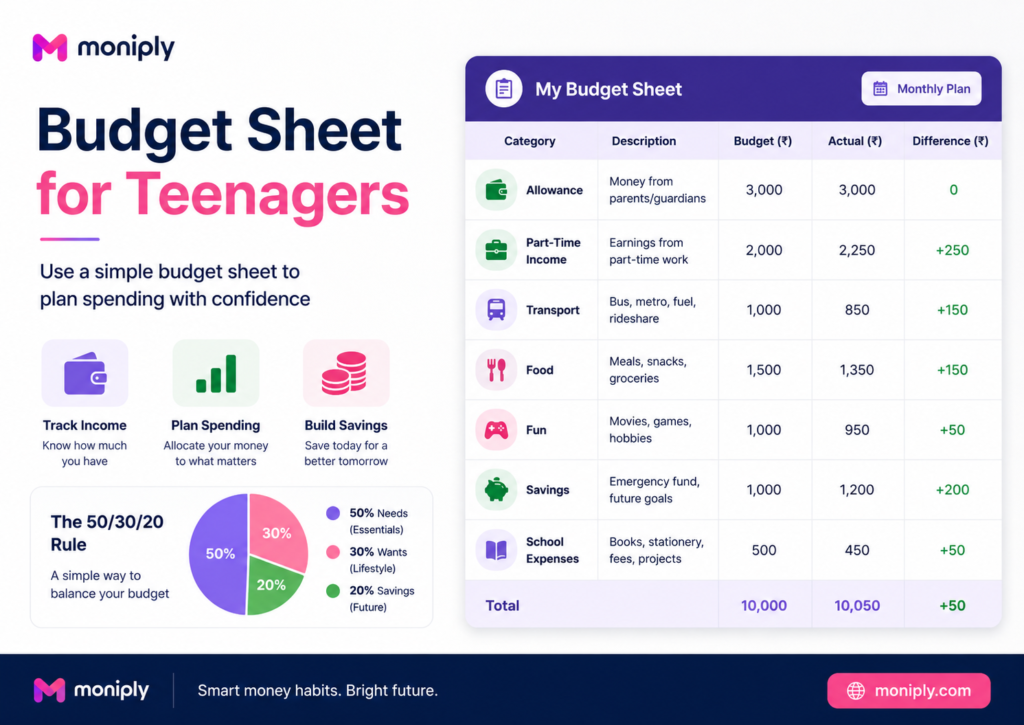
A teen version can be 50% needs and planned responsibilities, 30% wants and fun spending, and 20% savings or giving.
Some teens can save more because they have few required expenses. Others may need to contribute to transport, school costs, family support, or work expenses. The plan should respect the teen’s real situation.
Moniply’s Budget Calculator can help test different percentages without making the teen feel locked into one formula.
How to Build a Budget for Teenager Worksheet
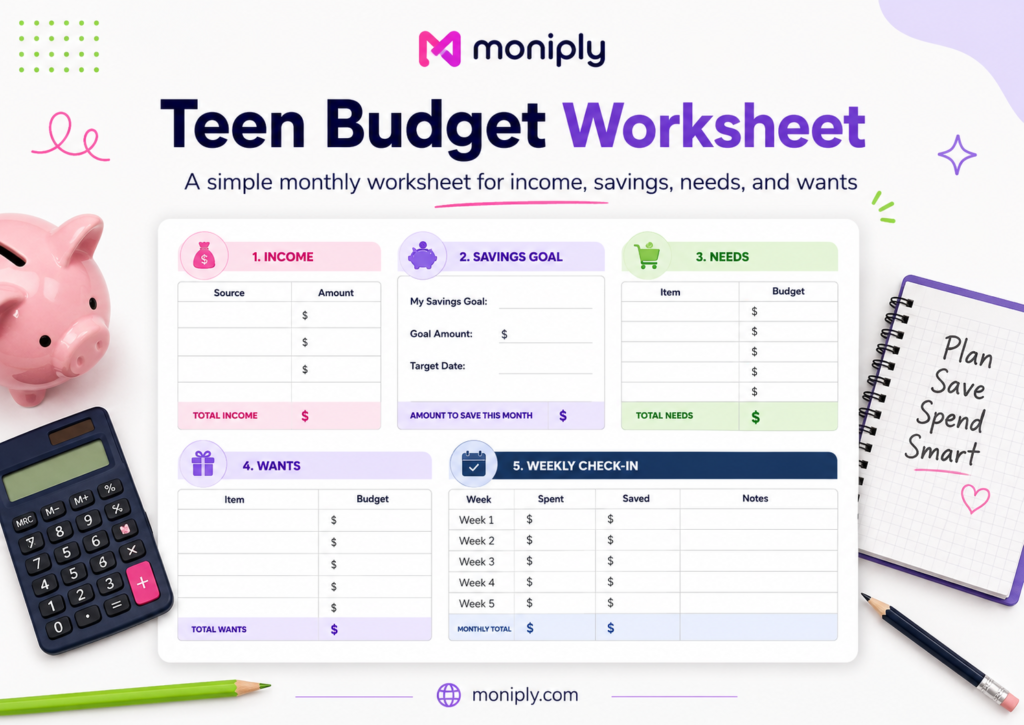
A useful worksheet should fit on one page and be easy to complete in ten minutes.
Section one: income. List allowance, gifts, part-time work, cash, online sales, or side money.
Section two: planned savings. Decide the amount that moves to savings before spending.
Section three: needs. Add school, transport, phone, lunch, sports, supplies, or other essentials.
Section four: wants. Add fun money categories such as games, snacks, shopping, streaming, and outings.
Section five: review. Compare planned and actual spending, then write one change for next week.
Budget Sheet for Teenager Example
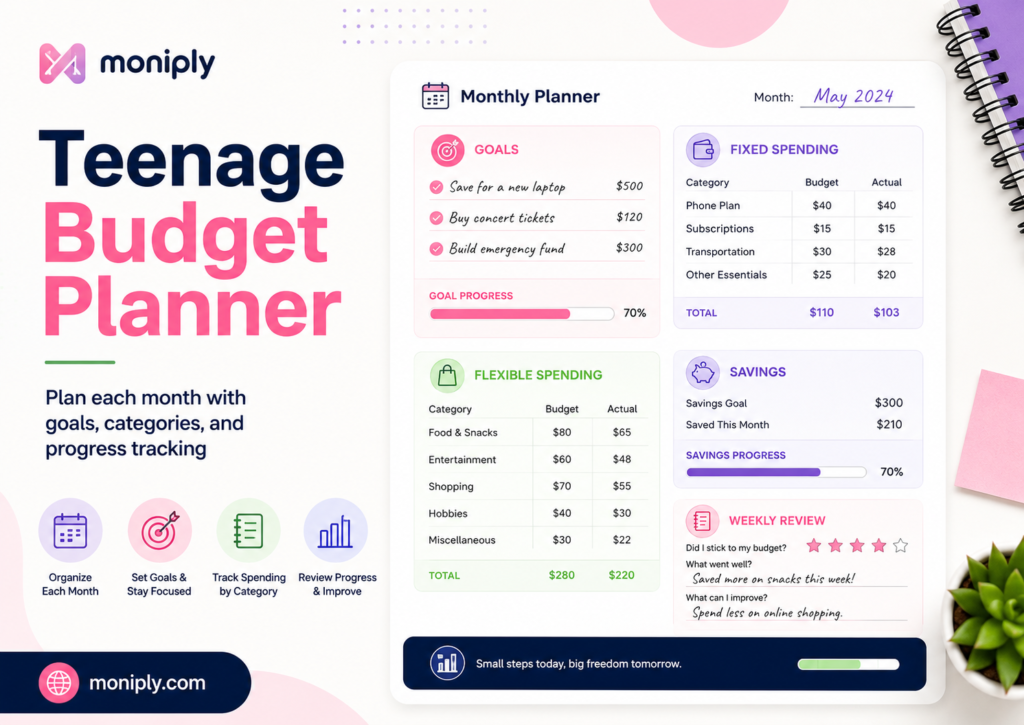
Here is a simple example. A teenager receives $80 this month. They save $20 for a phone goal, set aside $20 for transport and school items, allow $25 for snacks and outings, keep $10 for gifts or giving, and leave $5 as a small buffer.
The exact numbers do not matter as much as the habit. The teen is learning to decide before spending instead of guessing afterward.
When the budget sheet shows overspending, it should become a learning moment, not a punishment. Ask what changed and what adjustment would make next week easier.
Teenage Budget Planner: Weekly Routine
A teenage budget planner works best with a weekly rhythm.
Day one: write income and expected spending. Day three: check whether anything changed. Day seven: review actual spending and savings.
The weekly routine helps teenagers connect choices with results. They see how a small snack habit, game purchase, rideshare, or subscription affects the savings goal.
A weekly review also makes money conversations calmer because the family is looking at facts instead of arguing from memory.
Privacy and Safety Rules for Teen Budget Apps
Teenagers should not enter sensitive information into a random app without guidance. Parents and guardians should review age requirements, privacy policies, permissions, ads, in-app purchases, data sharing, and whether a bank connection is required.
The FTC’s children’s privacy guidance and COPPA resources focus on protecting children’s personal information online, especially for children under 13. Even when a teen is older, privacy and data-sharing questions still matter.
A teen budget app should not pressure a young user to connect financial accounts, share school details, disclose personal information unnecessarily, or make purchases inside the app.
For many families, manual tracking is the safest beginner option.
What Parents and Guardians Should Review
Parents and guardians can help without controlling every decision. Review the app or worksheet together, agree on categories, and decide which expenses the teen is responsible for.
A supportive review asks: What went well? What surprised you? What do you want to save for? What category needs a limit? What can we change next week?
The goal is confidence and accountability, not shame.
How Moniply Fits the Teen Budget System
Moniply can support the system through simple tools and learning pages. Teens and families can use the Budget Calculator to test categories, the Savings Goal Calculator to plan a goal, and the Budget Dashboard to understand income, spending, and savings visually.
For article readers, a teenage budget app should be paired with learning. A calculator tells the number, but a worksheet and weekly review teach the habit.
Common Teenage Budget Mistakes
- Tracking only spending and ignoring income.
- Forgetting small cash purchases.
- Treating savings as whatever remains after spending.
- Using too many categories at the beginning.
- Not reviewing subscriptions or in-app purchases.
- Comparing one teen’s budget with another teen’s budget.
- Using a budget app without checking privacy settings.
- Giving up after one imperfect week.
Final Takeaway
A teenage budget should be simple, safe, and repeatable. The best system may use a budget app for quick tracking, a budget for teenager worksheet for weekly review, and a budget sheet for teenager goal planning. Start with income, needs, wants, savings, and one weekly review. That simple routine can build confidence long before adult bills begin.
Use Moniply to Build the Teen Budget
Use the Budget Calculator to test teen budget categories, the Savings Goal Calculator to plan a goal, and the Budget Dashboard to understand the full monthly picture.
Related Moniply Guides
- 50/30/20 Budget Rule
- How to Track Expenses
- Monthly Budget Checklist
- Emergency Fund Guide
- Free Money Tools
- Moniply App
Frequently Asked Questions
What is the best budget app for a teenager?
The best budget app for a teenager is simple, private, easy to review, and suitable for the teen’s age and family rules. Manual tracking, simple categories, savings goals, and exportable worksheets are often more useful than advanced banking features.
Should a teenager use a budget worksheet or an app?
Both can work. An app is useful for quick tracking, while a worksheet is better for family or classroom review. Many teens learn best by using both together.
What should be included in a budget for teenager worksheet?
Include income, savings, needs, wants, planned spending, actual spending, and one weekly review question.
What is a simple teenage budget split?
A simple starting split is 50% needs and responsibilities, 30% wants, and 20% savings. Teens with fewer expenses may save more, while teens with real responsibilities may need a different split.
Should a teen connect a bank account to a budget app?
Only with parent or guardian review. Many beginners can start safely with manual tracking and a printable worksheet.
How often should teens review a budget?
A weekly review works well because teen spending can change quickly from school, social events, transport, hobbies, and small purchases.
Can this article replace financial or legal advice?
No. It is general educational content. App privacy, banking access, employment rules, and family responsibilities vary by age, location, and situation.
Disclaimer: This article is for general educational purposes and is not financial, legal, privacy, banking, employment, tax or parental advice. Parents and guardians should review apps, accounts and permissions for minors.
Sources and Further Reading
- CFPB Youth Financial Education
- CFPB Financial Literacy Activities
- FDIC Money Smart for Young People
- FTC Children’s Privacy
- FTC COPPA Rule
Turn this article into a monthly budget
Start with income, fixed costs, flexible spending, and one savings target. Then review your numbers in the dashboard.
Get the Moniply AI Finance Coach app
Moniply is building an Android app that turns budgeting, savings, debt payoff, and money decisions into simple AI-guided next steps.

Author: M.Adil
Finance professional and Moniply founder. Moniply helps everyday people use simple tools, practical guides, and AI-style money coaching to budget, save, and make calmer financial decisions.