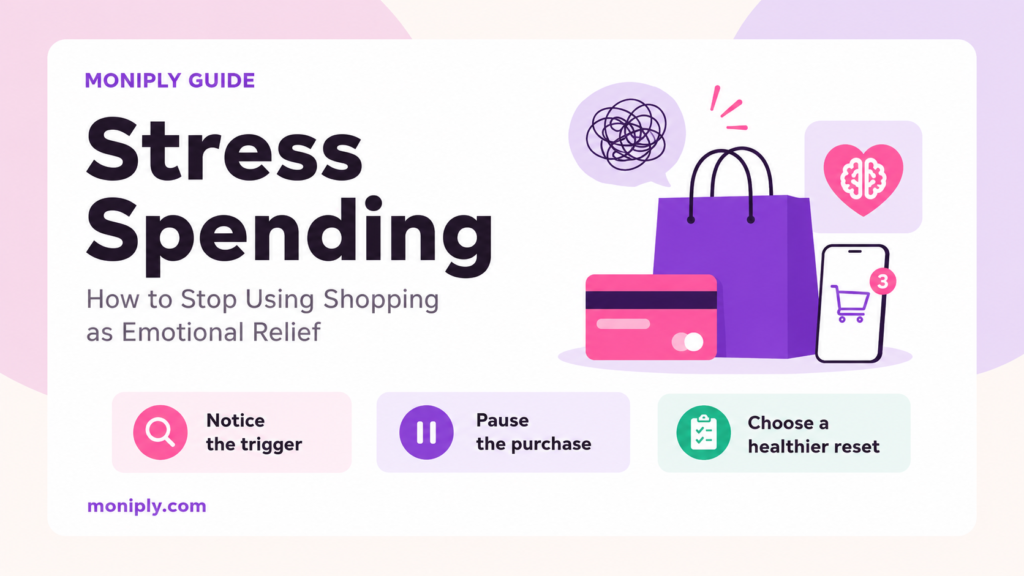
Stress spending happens when shopping becomes a fast way to change how you feel. A difficult workday, loneliness, anxiety, boredom, conflict, social comparison, or a sense of losing control can make browsing and buying feel soothing for a few minutes. The purchase may create excitement, distraction, or agency—but the relief is often temporary, while the financial consequences can last much longer.
What Is Stress Spending?
Stress spending is the use of shopping or purchasing as an emotional coping strategy rather than a response to a genuine practical need. It is sometimes called emotional spending, retail therapy, comfort buying, doom spending, or impulse shopping.
An occasional unplanned purchase is not automatically a serious problem. The pattern becomes concerning when shopping repeatedly follows difficult emotions, causes debt or secrecy, creates conflict, produces shame, or feels hard to control.
Stress spending is not a moral failure. It is a learned relief strategy. That means it can be understood, interrupted, and replaced.
Why Shopping Can Feel Like Emotional Relief
Shopping offers several forms of immediate psychological reward: novelty, anticipation, distraction, decision-making, and a sense of control. Browsing can temporarily move attention away from uncomfortable feelings.
Online shopping increases convenience and removes friction. Saved cards, one-click checkout, targeted recommendations, countdown timers, and personalized sale alerts can shorten the time between an emotion and a purchase.
The relief is usually brief. Once the excitement fades, the original emotion may return along with regret, debt, clutter, relationship tension, or anxiety about the account balance.
The Stress-Spending Cycle
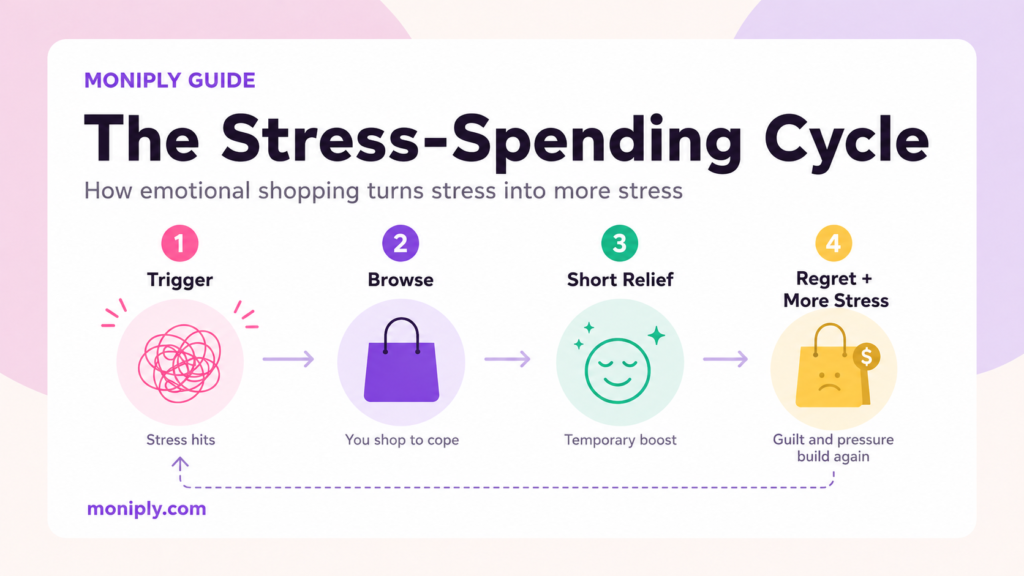
The cycle often begins with a trigger such as work pressure, loneliness, fatigue, conflict, boredom, comparison on social media, or feeling underappreciated.
The person browses for relief. The search itself can feel rewarding because it creates possibility and distraction.
A purchase creates a short emotional lift. Later, the cost, clutter, repayment, secrecy, or regret adds new stress.
That new stress can trigger more shopping. Breaking the cycle means intervening before or during the urge—not only regretting the purchase afterward.
Step 1: Identify Your Personal Triggers
Track the moments when the urge appears. Record the time, feeling, situation, shopping platform, item, expected relief, and what happened afterward.
Look for patterns: after difficult meetings, late at night, after scrolling social media, during relationship conflict, on payday, when bored, or when feeling excluded.
Do not use the journal to criticize yourself. Use it to learn when your decision-making needs more protection.
Step 2: Use the 24-Hour Purchase Pause

For non-essential purchases, place the item on a wish list or leave it in the cart for at least 24 hours. Use a longer waiting period for expensive purchases.
During the pause, ask: What am I feeling? What problem do I expect this item to solve? Would I still want it if it were not on sale? Can I pay in full without disrupting bills or goals?
A real need usually survives the waiting period. Emotional urgency often weakens.
Step 3: Add Friction to Online Shopping

Delete shopping apps from your phone, sign out of retailer accounts, remove saved card information, disable one-click checkout, and mute promotional alerts.
Unsubscribe from sale emails and influencer shopping content that repeatedly triggers comparison or urgency.
Keep a written wish list with the date, price, purpose, and planned funding source. Revisit it during a weekly budget review instead of buying immediately.
Step 4: Build a Non-Shopping Relief Menu
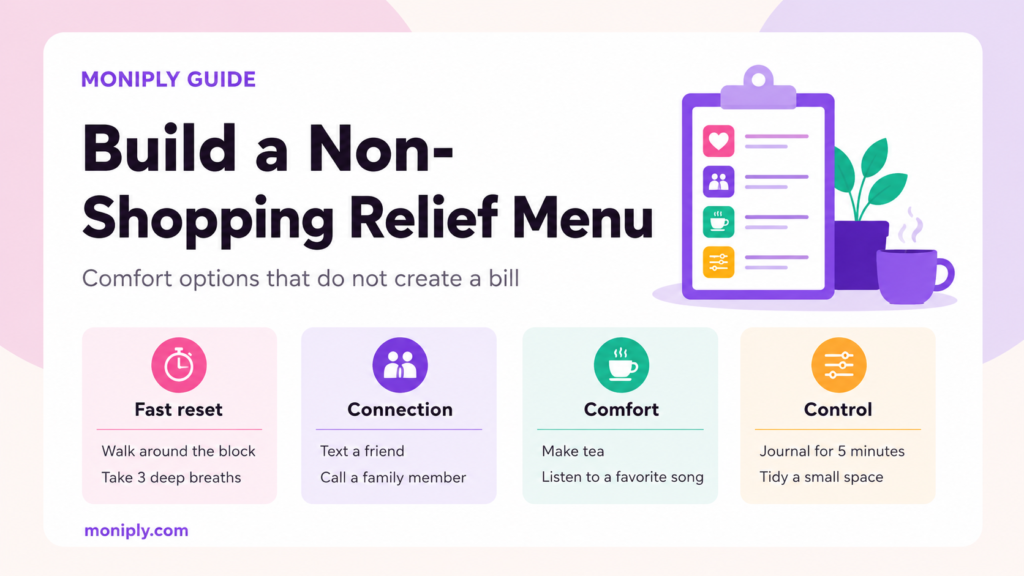
Prepare alternatives before the next stressful moment. The best substitute is fast, accessible, and emotionally relevant.
Physical resets include a short walk, stretching, showering, breathing slowly, tidying one area, or making tea.
Connection resets include calling a friend, sending a voice note, sitting with family, or asking for support directly.
Comfort resets include music, journaling, reading, watching something familiar, cooking, or using a hobby you already own.
Control resets include checking the budget, planning tomorrow, completing one small task, or transferring a small amount to a goal.
Step 5: Create a Safe Personal Spending Allowance
An overly restrictive budget can create rebound spending. Give yourself a realistic amount for personal enjoyment, hobbies, fashion, beauty, books, entertainment, or small treats.
The allowance should be visible and guilt-free. When the amount is used, pause until the next budget period rather than borrowing from bills or savings.
Use the Moniply Budget Calculator or Budget Dashboard to create a category that fits your actual income and priorities.
Step 6: Separate Wanting From Buying
You are allowed to like an item without owning it. Save images, create a wish list, compare options, borrow, rent, or revisit the idea later.
Ask whether you want the product, the identity attached to it, the feeling of being rewarded, or relief from the current moment.
This question helps uncover the need underneath the purchase.
Step 7: Protect Yourself From Buy Now, Pay Later
Buy now, pay later can make a purchase feel smaller by splitting it into installments. The emotional brain sees the item now and the cost later.
Multiple installment plans can overlap and obscure the total amount owed. Before using any financing, write down every payment, due date, fee, and the full purchase price.
Do not use installments to make an emotional purchase feel affordable. If the item cannot fit the budget in full, treat that as useful information.
Step 8: Create an Emotional Spending Recovery Plan
If you overspend, stop the cycle without punishment. Review what happened, return eligible items, cancel pending orders when possible, and update the budget.
Prioritize rent or mortgage, utilities, food, transport, medicine, insurance, and minimum debt payments before discretionary purchases.
Create a realistic repayment plan. Avoid using a new loan or another credit account to hide the problem unless professional debt advice supports the decision.
Write one prevention step for the next trigger. Recovery is easier when it produces a new system rather than only regret.
Signs You May Need More Support
Seek additional help when shopping feels uncontrollable, causes significant debt, is hidden from loved ones, creates relationship conflict, interferes with work or daily life, or is followed by intense shame or depression.
A licensed mental health professional can help with emotional regulation, anxiety, depression, trauma, compulsive behavior, or other concerns connected to spending.
A nonprofit credit counselor or qualified debt adviser can help organize debts and payment options. If you feel unsafe, hopeless, or at risk of harming yourself, contact local emergency services or a crisis support service immediately.
A 10-Minute Weekly Stress-Spending Review
- Review purchases that were driven by emotion or urgency.
- Note the trigger and the relief you were seeking.
- Return or cancel eligible purchases.
- Update the personal spending category and any debt balances.
- Choose one friction step for the coming week.
- Restock your non-shopping relief menu.
- Celebrate one urge you delayed or handled differently.
A Simple Script for the Next Urge
Try saying: I am having the urge to shop because I feel stressed. I do not have to solve this feeling with a purchase. I will wait 24 hours, choose one real relief action, and review the item when I feel calmer.
The script creates space between the emotion and the action. It does not require the feeling to disappear before you make a safer choice.
Build a Safer Spending Plan
Use the Budget Calculator, Budget Dashboard, and Debt Payoff Calculator.
Related Moniply Guides
Frequently Asked Questions
Is stress spending the same as compulsive buying?
Not always. Stress spending can be occasional emotional shopping. Compulsive buying is generally more repetitive, difficult to control, and harmful to finances or daily life. A qualified professional can help assess a serious pattern.
Why do I shop when I feel anxious or sad?
Shopping can create distraction, anticipation, reward, and a temporary sense of control. The effect may fade quickly, leaving the original feeling and a new financial consequence.
How long should I wait before an impulse purchase?
A 24-hour pause is a useful starting point for non-essential purchases. Use several days or longer for expensive items.
Should I ban all non-essential spending?
Usually not. A realistic guilt-free allowance can reduce rebound spending and help separate planned enjoyment from emotional purchases.
How can I stop shopping apps from triggering me?
Delete the apps, sign out, remove saved payment details, disable notifications, unsubscribe from sale emails, and keep a dated wish list.
What should I do after a stress-spending mistake?
Return or cancel what you can, update the budget, protect essential bills, create a repayment plan, identify the trigger, and add one prevention step.
When should I talk to a therapist or counselor?
Seek support when shopping feels uncontrollable, causes debt or secrecy, damages relationships, or is linked with anxiety, depression, trauma, or intense shame.
Is this article medical or financial advice?
No. It provides general educational information and does not replace personalized mental health, financial, legal, credit, or debt advice.
Final Takeaway
Stress spending is not solved by shame or an impossibly strict budget. It changes when you recognize the trigger, add time and friction, build better relief options, and recover from mistakes without abandoning the plan.
Disclaimer: This article is for general education and is not mental health, medical, financial, legal, credit, or debt advice. Seek qualified support when shopping feels uncontrollable or causes significant harm.
Sources and Further Reading
- World Psychiatry – A review of compulsive buying disorder
- Consumer Financial Protection Bureau – Budgeting resources
- Federal Trade Commission – Buy Now, Pay Later information
- Kiplinger – Emotional money behaviors and financial resilience
Create a savings plan from this guide
Set a realistic monthly target, track progress, and use Moniply tools to stay consistent.
Get the Moniply AI Finance Coach app
Moniply is building an Android app that turns budgeting, savings, debt payoff, and money decisions into simple AI-guided next steps.

Author: M.Adil
Finance professional and Moniply founder. Moniply helps everyday people use simple tools, practical guides, and AI-style money coaching to budget, save, and make calmer financial decisions.