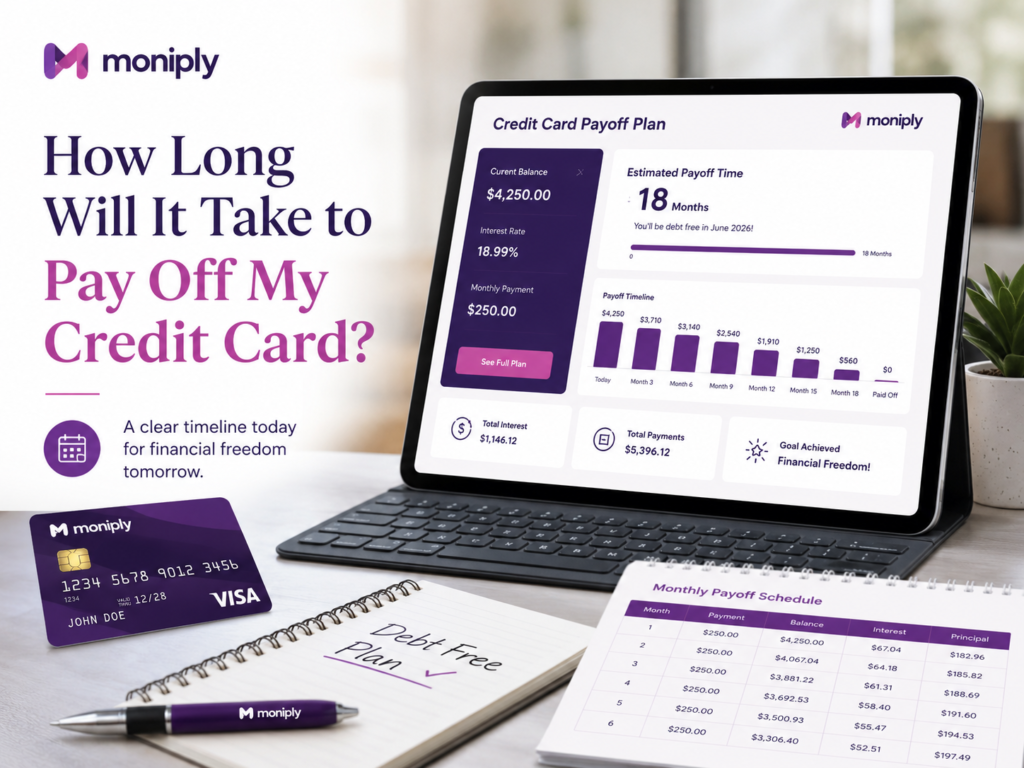
If you have ever stared at your credit card balance and wondered, “When will this finally be gone?”, you are not alone. One of the most common debt questions people ask is how long it will take to pay off my credit card.
The answer depends on a few important details: your current balance, your annual percentage rate (APR), your monthly payment, and whether you plan to add extra payments along the way. The good news is that you do not need to guess. A good calculator can estimate your payoff timeline and show you how small changes may shorten it.
In this guide, you will learn what affects your payoff date, how to use the Moniply Credit Card Payoff Calculator, how minimum payments change the timeline, and what to do if you want to become debt-free faster.
What Determines How Long It Takes to Pay Off a Credit Card?
Your payoff timeline is not based on balance alone. A smaller balance with a very high APR may linger longer than a larger balance with a lower APR and stronger monthly payments.
The biggest factors are:
- Your current balance
- Your APR or interest rate
- Your minimum monthly payment
- Any extra amount you pay each month
- Whether you keep using the card while trying to pay it off
- Any fees or penalty-rate changes that increase the balance
If interest is high and your monthly payment is low, a large share of your payment may go to interest instead of principal. That means progress feels slow even when you are paying every month.
This is why a credit card payoff calculator is useful. It helps turn a confusing credit card statement into a realistic timeline.
How to Use a Credit Card Payoff Calculator
To estimate your payoff date, open the Moniply Credit Card Payoff Calculator and enter the following:
- Current balance
- APR
- Current monthly payment or minimum payment
- Optional extra monthly payment
- Optional target payoff date, if supported
After you submit the numbers, the calculator can estimate:
- How many months it may take to pay off the balance
- Your estimated debt-free date
- Total interest you may pay over time
- How much faster you could finish by adding extra payments
This matters because many people focus only on whether they can make the next payment. A calculator helps you see the bigger picture: how today’s payment behavior may affect the next year, two years, or even five years.
Example: Minimum Payment vs Extra Payment
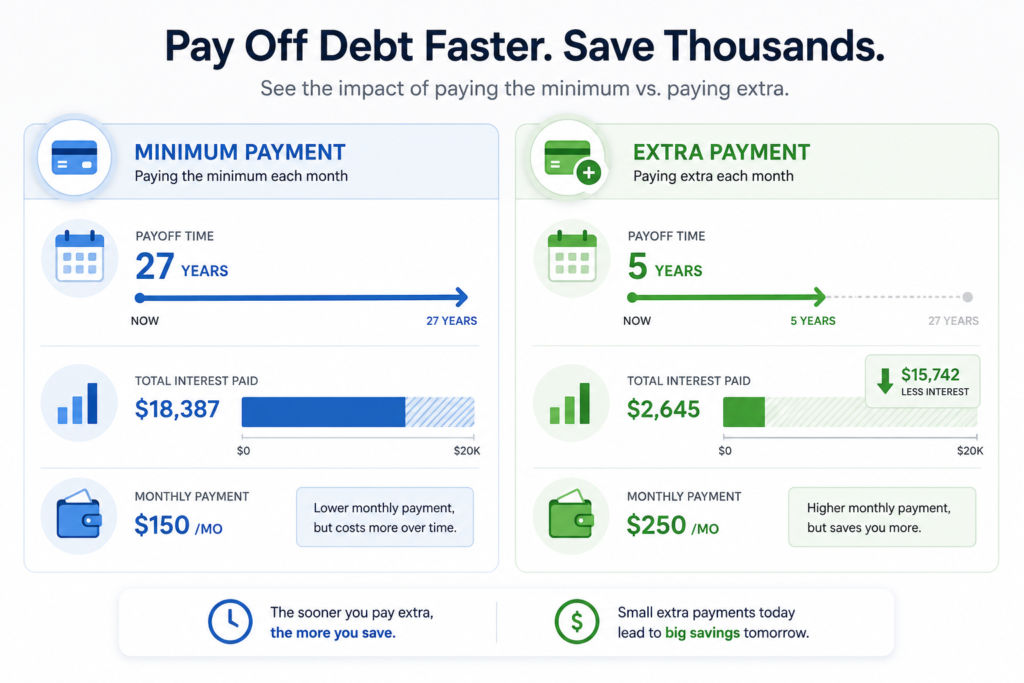
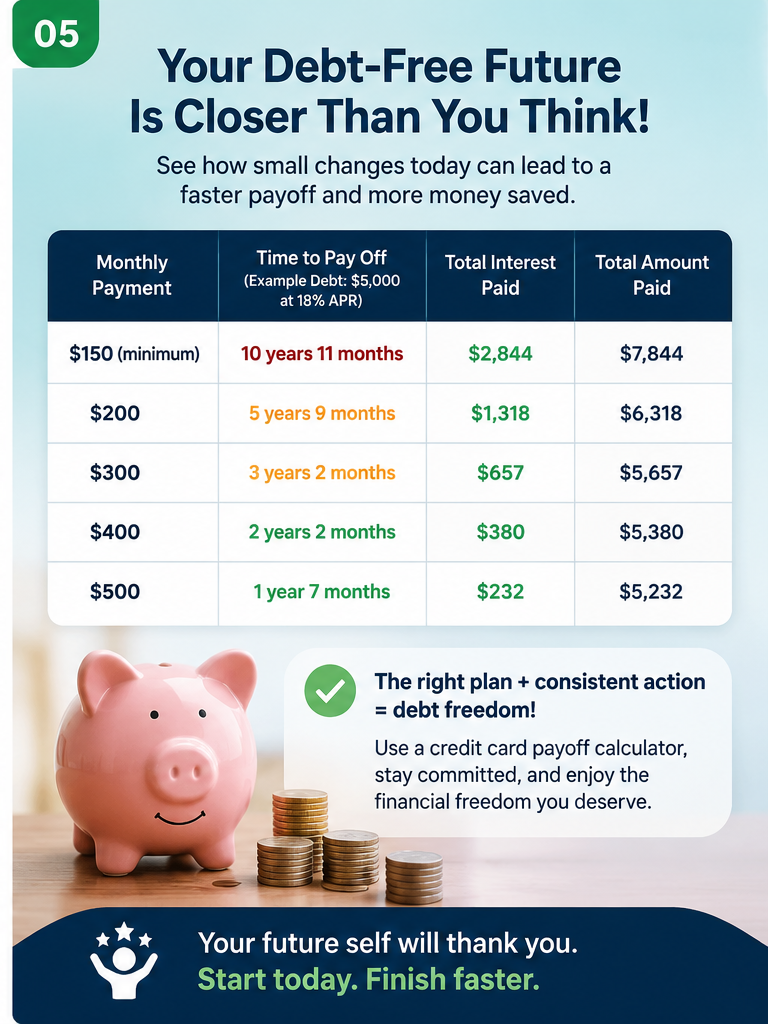
Imagine you have a $5,000 credit card balance and a high APR. If you only make the minimum payment each month, the payoff timeline may be much longer than you expect.
Now imagine that you add an extra $100 each month. In many cases, that simple change may reduce the payoff period dramatically and lower the total interest cost.
The exact result depends on your card terms, but the lesson is consistent: extra payments usually speed up progress, while minimum-only payments stretch the timeline.
This is where using both a credit card payoff calculator and a minimum payment calculator becomes helpful. One shows the full timeline, and the other helps you understand how minimum payment rules affect your pace.
Why Minimum Payments Keep You in Debt Longer
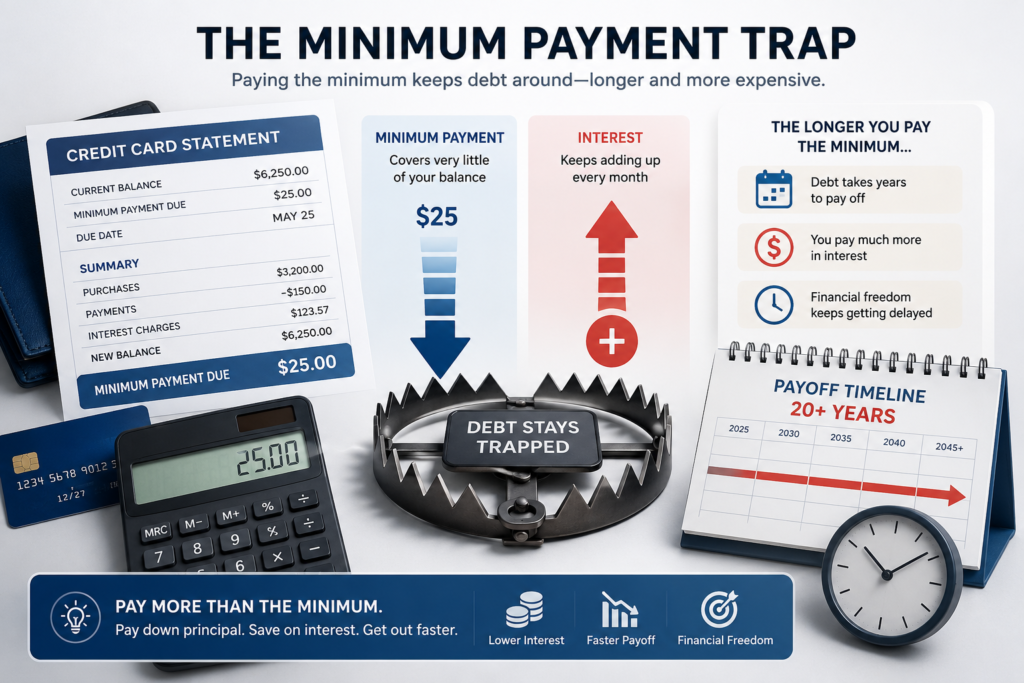
Minimum payments are useful for staying current and avoiding immediate late-payment damage. However, they are rarely enough if your goal is to get rid of the balance quickly.
When you pay only the minimum:
- A large portion of your payment may go to interest
- Your principal balance goes down slowly
- A single new purchase can undo your progress
- A long payoff timeline increases the total interest paid
That is why people often feel stuck even when they are technically doing the right thing. They are making payments, but the structure of revolving debt keeps the finish line far away.
If you want to understand the difference clearly, compare your numbers in the Moniply Credit Card Minimum Payment Calculator and then test a higher payment in the main payoff calculator.
How to Shorten Your Credit Card Payoff Timeline
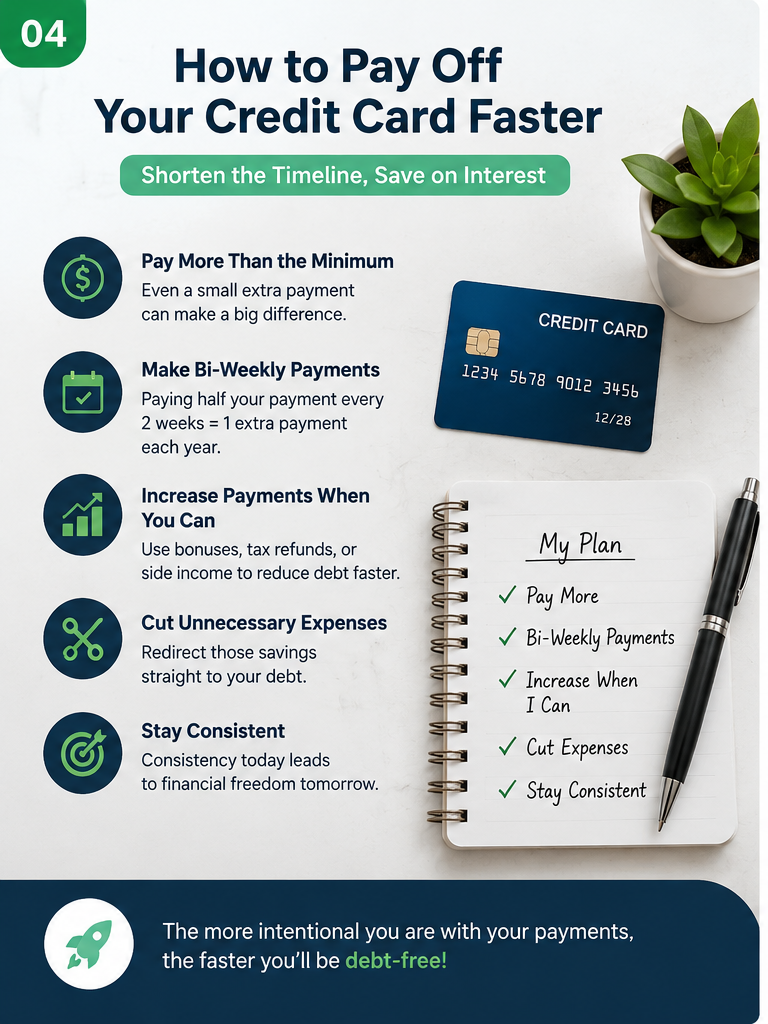
If the calculator shows a payoff timeline that feels too long, do not panic. There are several ways to reduce the number of months.
- Pay more than the minimum whenever possible
- Stop adding new purchases to the card
- Redirect extra income, refunds, or side-hustle money to the balance
- Use a realistic monthly budget so you know what you can actually afford
- Review whether a balance transfer offer could lower interest in the short term
- Track progress monthly instead of avoiding the numbers
You do not need a perfect financial life to make progress. Many people shorten their timeline just by making one consistent change, such as adding a fixed extra amount every payday.
If cash flow is tight, use the Moniply Budget Calculator to find room in your monthly plan. Even a small monthly adjustment can help.
What If You Have More Than One Credit Card?
If you are carrying balances on multiple cards, your question changes from “How long will it take to pay off my credit card?” to “How should I prioritize all of my cards?”
In that case, move beyond a single-card payoff tool and use the Moniply Debt Payoff Calculator. Then compare two common strategies:
- Debt snowball: pay off the smallest balance first for quick wins and motivation
- Debt avalanche: pay off the highest-interest balance first to reduce total interest cost
If you need momentum, the snowball method may help you stay engaged. If you want the most mathematically efficient path, the avalanche method often wins.
Moniply also offers a Debt Snowball Calculator and a Debt Avalanche Calculator so you can test both approaches before choosing one.
Should You Save Money First or Pay Off the Card Faster?
This is one of the most common follow-up questions. The answer depends on how financially stable you are right now.
If you have no emergency cushion at all, it may be wise to keep a small cash buffer while still attacking high-interest debt. Without any savings, one surprise expense can send you right back to the credit card.
If you already have a starter emergency fund, you may decide to push harder on the card balance. To compare both options, use the Moniply Save vs Pay Off Debt Calculator.
A balanced approach often works best: build a small safety net, then aggressively reduce high-interest debt.
Common Mistakes That Make Payoff Take Longer
- Keeping the card active for everyday spending while trying to pay it off
- Ignoring APR changes, annual fees, or penalty charges
- Guessing instead of using a calculator
- Making inconsistent payments
- Focusing only on the statement minimum
- Not revisiting the plan after income changes
The most avoidable mistake is emotional avoidance. Many people delay looking at their numbers because they are afraid of what they will see. But the calculator gives clarity, and clarity makes better decisions possible.
When to Get Extra Help
Sometimes the problem is not just one card. If you are juggling multiple balances, missing payments, or relying on credit cards for essentials, you may need a bigger recovery plan.
Start with a budget review and a calculator-based payoff strategy. If that still does not feel manageable, consider speaking with a nonprofit credit counselor or exploring reputable debt-help resources.
Be cautious with any service that guarantees instant results, pressures you into fast decisions, or tells you to stop paying without clearly explaining the consequences.
FAQ
How do I estimate how long it will take to pay off my credit card?
Use your current balance, APR, monthly payment, and any extra monthly payment in a credit card payoff calculator. The result is an estimate of your debt-free date and total interest cost.
Why does minimum payment make payoff take so long?
Minimum payments are often designed to keep your account current, not to eliminate the balance quickly. Because the payment may barely outpace interest and fees, the timeline can stretch for years.
Will paying more than the minimum help a lot?
Yes. Even a modest extra payment each month may cut months or years off your payoff timeline and reduce interest cost significantly.
Should I stop using the card while paying it off?
If possible, yes. New purchases increase your balance and can push your debt-free date farther away, which makes the calculator result less reliable.
What if I have more than one credit card?
Use a general debt payoff calculator, then compare the snowball and avalanche methods. That helps you decide whether to focus on quick wins or lower total interest.
Should I save money or pay off debt first?
That depends on your emergency cushion, interest rate, and overall stability. A small emergency fund plus a structured payoff plan works well for many people.
Final Takeaway
So, how long will it take to pay off your credit card? The honest answer is: it depends on your balance, APR, payment behavior, and whether you keep adding new debt.
But the practical answer is much more useful: you can estimate it right now. Use the Moniply Credit Card Payoff Calculator to test your current payment, compare extra-payment scenarios, and choose a plan that feels sustainable.
If you have more than one balance, connect your plan to the Debt Payoff Calculator, Debt Snowball Calculator, or Debt Avalanche Calculator. And if you are unsure how debt fits into your bigger financial life, pair your plan with the Budget Calculator and the Save vs Pay Off Debt Calculator.
A realistic estimate is often the first step toward real progress.
External References
- CFPB – How is credit card interest calculated?: https://www.consumerfinance.gov/ask-cfpb/how-is-credit-card-interest-calculated-en-44/
- CFPB – Credit cards: https://www.consumerfinance.gov/consumer-tools/credit-cards/
- FTC – How to get out of debt: https://consumer.ftc.gov/articles/how-get-out-debt
Build your debt payoff plan
Compare payoff methods, check your monthly capacity, and turn this article into a step-by-step action plan.
Get the Moniply AI Finance Coach app
Moniply is building an Android app that turns budgeting, savings, debt payoff, and money decisions into simple AI-guided next steps.

Author: M.Adil
Finance professional and Moniply founder. Moniply helps everyday people use simple tools, practical guides, and AI-style money coaching to budget, save, and make calmer financial decisions.